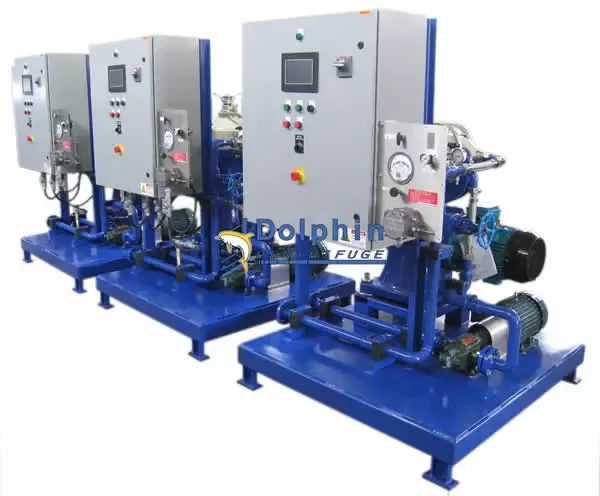
This case study covers applying an Alfa Laval diesel centrifuge for the large-scale recovery of used diesel fuel that is used for washing crude oil railcars.
Dolphin Centrifuge supplies disc stack centrifuge systems for diesel purification, removing sludge, water, and solids at up to 8,000 Gs. The DMPX-070 (Alfa Laval WHPX 510 equivalent) delivers 59–72 GPM with Class 1 Division 2 explosion-proof certification. Over 40 years of diesel fuel centrifuge experience.
Summary: A facility using 10,000 gallons of fresh diesel daily to wash crude oil railcars partnered with Dolphin Centrifuge to build a 40 GPM diesel fuel purification system based on the Alfa Laval WHPX 510 centrifuge. Pilot testing proved the centrifuge could reduce impurities to under 0.12%, making the diesel fully reusable. The system enabled each batch of diesel to be reused 2 to 3 times before replacement, saving over $2 million annually.
The Source of Contaminated Diesel
Railcars transporting crude oil require periodic cleaning to remove accumulated sludge, wax, and other residues. Diesel fuel is commonly used as the washing fluid for railcar cleaning operations due to its effective solvency. This particular facility consumed approximately 10,000 gallons of fresh diesel every day for this purpose.
The spent diesel, now contaminated with crude oil residues, water, and sludge (often called "black diesel"), could not be reused in its contaminated state. The facility owner, familiar with Alfa Laval centrifuge technology from naval service, contacted Dolphin Centrifuge to explore centrifugal purification of the spent diesel.
The Previous Purification Approach
Before contacting Dolphin Centrifuge, the facility had tried a chemical additive approach. A chemical was mixed into the contaminated diesel to precipitate impurities into a heavy "black phase" that would settle out over time. This settling-based method was slow, required large tank capacity for extended settling times, and demanded significant manual labor to decant the separated phases. It could not keep pace with the 10,000 gallon daily diesel consumption.
Pilot-Scale Testing
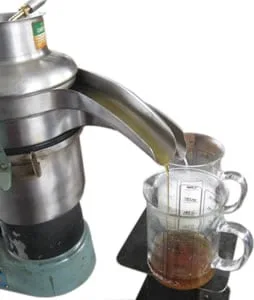
Dolphin Centrifuge recommended testing the chemical-diesel mixture through a pilot-scale disc stack centrifuge at our in-house testing facility. The customer-provided chemical was mixed into the black diesel at the specified ratio, and the mixture was processed through the centrifuge.
| Parameter | Before Centrifuge | After Centrifuge |
|---|---|---|
| Water Content | 12% (v/v) | 0.05% (v/v) |
| Sludge Content | 5.8% (v/v) | 0.06% (v/v) |
The centrifuge separated the heavy contaminated phase cleanly, producing a stream of clear diesel with less than 0.12% total impurities — well within reusable specifications for railcar washing. Based on these results, the customer contracted Dolphin Centrifuge to build a full-scale 40 GPM diesel purification system.
Full-Scale System Design
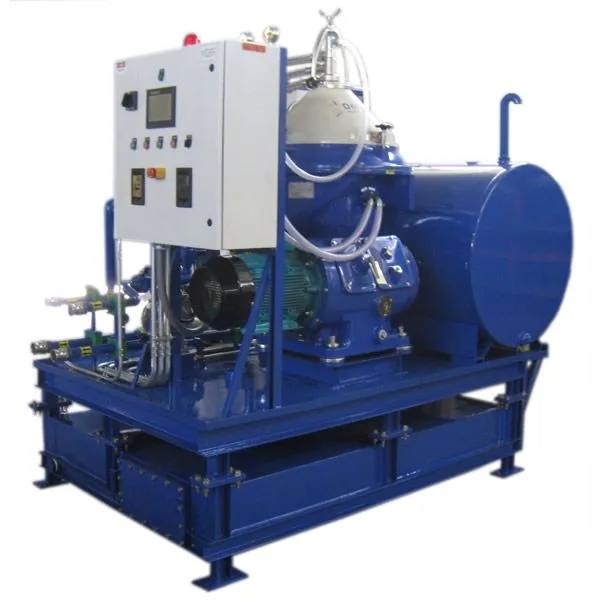
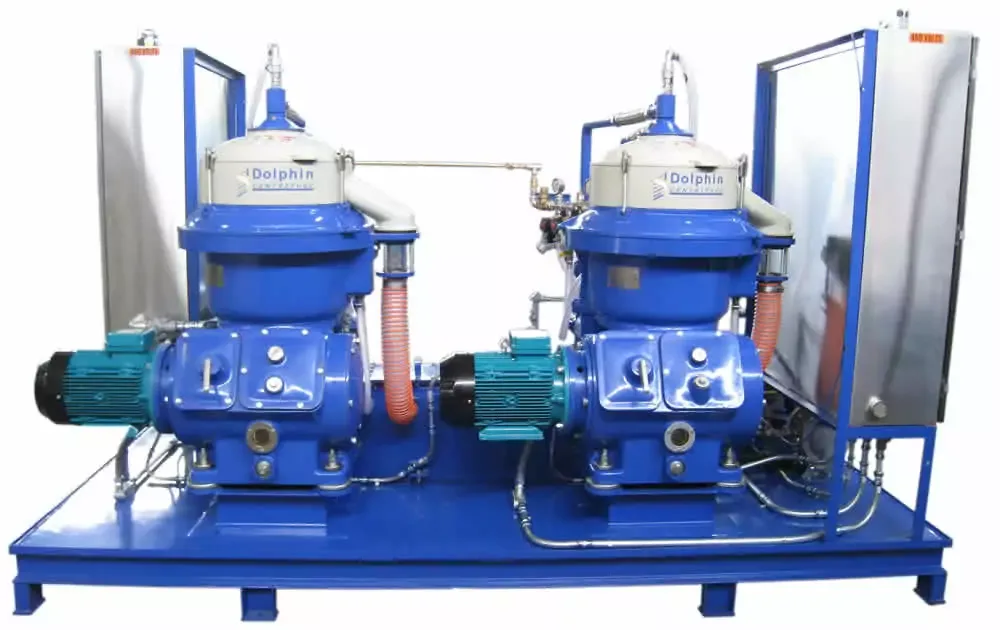
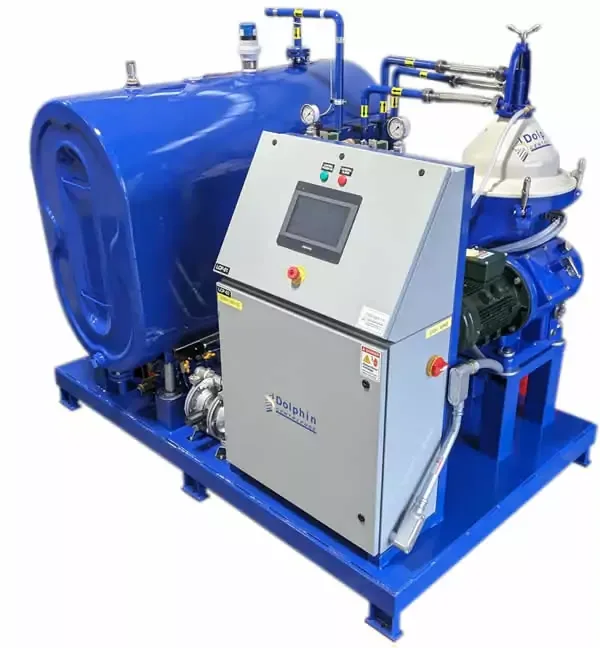
Dolphin Centrifuge engineered and manufactured a complete diesel purification module built around the Alfa Laval WHPX 510 three-phase self-cleaning disc stack centrifuge. The system included several custom features designed by Dolphin's engineering team:
- Chemical injection port with metering pump for precise additive dosing
- Dynamic inline mixing system on the centrifuge feed line for thorough chemical/diesel blending
- Flow meters on both diesel and chemical lines with PID loop control for consistent mix ratios
- VFD-controlled positive displacement feed pump
- Fully automatic PLC/touch-screen control panel
- Sludge tank with integrated disposal system
- Clean diesel tank with return pump
- Class 1, Division 2 explosion-proof rating for hazardous area operation
Field Results & Savings
Dolphin Centrifuge's engineering team performed the on-site installation and commissioning. The system was configured to process the daily volume of spent diesel during the night shift, making recovered diesel available each morning for the day's railcar washing operations.
With the centrifuge system in operation, the customer was able to reuse each batch of wash diesel 2 to 3 times before the stock needed to be refreshed. This directly reduced fresh diesel purchases from 10,000 gallons per day to a fraction of that volume.
The result: annual savings exceeding $2 million. The diesel centrifuge module paid for itself within the first month of operation.
| System Specification | Details |
|---|---|
| Centrifuge Model | Alfa Laval WHPX 510 — 3-Phase, Self-Cleaning Disc Stack |
| Processing Capacity | 40 GPM |
| Hazardous Area Rating | Class 1, Division 2 |
| Key Accessories | Chemical mixer, dosing pump, flow meters, PLC controls, sludge system |
Contact Dolphin Centrifuge at (248) 522-2573 or sales@dolphincentrifuge.com for pricing on diesel fuel centrifuge systems. We maintain a large inventory of Alfa Laval diesel centrifuges ready for immediate delivery.
Frequently Asked Questions
What contamination can an Alfa Laval diesel centrifuge remove?
Alfa Laval diesel centrifuges (WHPX and MOPX series) remove water (free and emulsified), solid particulates down to 0.5 microns, sludge, biological growth, and oxidation byproducts from diesel fuel. The three-phase separation process simultaneously removes both water and solids in a single pass, restoring off-spec diesel to ASTM D975 specification.
What flow rate do Alfa Laval diesel centrifuges handle?
Dolphin's DMPX series diesel centrifuge systems range from 7 GPM (DMPX-010) up to 72 GPM (DMPX-070) on diesel at 13 cSt. Larger capacity can be achieved with parallel centrifuge installations.
How much diesel fuel can be recovered with centrifuge purification?
Recovery rates depend on initial contamination level. In the railcar wash facility case study on this page, centrifuge purification recovered over $2 million in diesel fuel annually that was previously classified as waste. Typical recovery rates for contaminated diesel range from 85% to 99% of the original fuel volume.
Is the Alfa Laval WHPX centrifuge available in explosion-proof configuration?
Yes. Alfa Laval WHPX series centrifuges are available with Class 1 Division 2 explosion-proof motors and controls, suitable for diesel fuel environments classified as hazardous areas under NFPA 497 or NEC 500-516.
How does centrifuge diesel purification compare to filter systems?
Centrifuge purification has significantly lower operating costs than filter-based systems for high-volume applications: no filter media replacement, no media disposal, continuous operation without downtime, and simultaneous water and solids removal. The payback period for a centrifuge system is typically 6–18 months versus ongoing filter costs.