
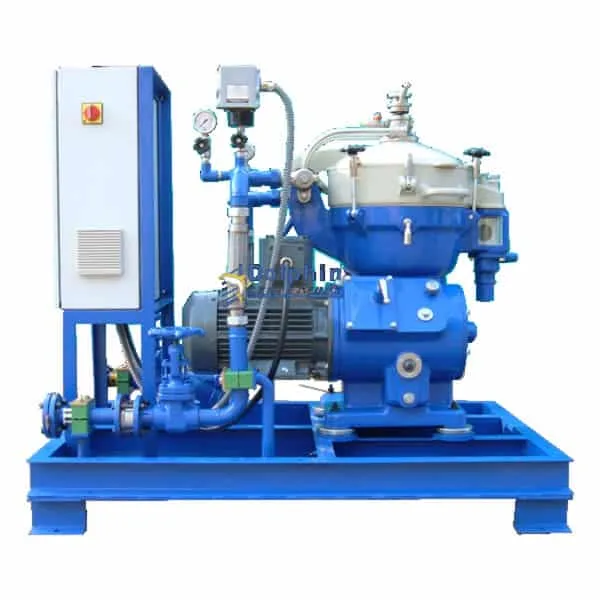
Dolphin Centrifuge supplies three-phase disc stack centrifuge systems for biodiesel production — separating biodiesel (FAME), glycerin, and water in a single continuous pass at 8,000 Gs. These self-cleaning separators replace wash tanks and gravity settling in the transesterification process, processing 5–70+ GPM of biodiesel mixture.
What is Biodiesel
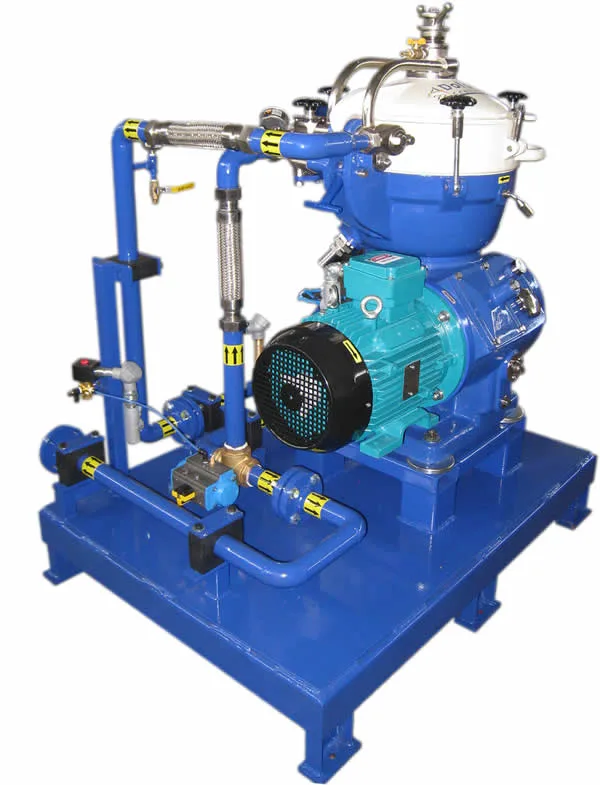
Dolphin Centrifuge, based in Warren, Michigan, supplies purpose-built disc stack centrifuge systems for this application at 8000 Gs. Biodiesel is a renewable alternative to petroleum diesel produced from natural fats and oils. It can be used in standard diesel engines with little or no modification and burns significantly cleaner than fossil-derived diesel fuel.
The production of biodiesel relies on a chemical reaction called transesterification, in which vegetable oil or animal fat is converted into fatty acid methyl esters (FAME) — the chemical name for biodiesel. This reaction requires efficient separation of by-products, which is where industrial centrifuges play a critical role.
Common feedstocks include waste vegetable oil (WVO), soybean oil, canola oil, animal tallow, and other triglyceride-based fats. The quality of the feedstock directly impacts the downstream separation requirements and centrifuge sizing.
Biodiesel is not to be confused with black diesel, which is also an alternative fuel but is made from used oils.
Also, read our Alfa Laval Centrifuge Selection Guide.
Biodiesel Production Process
The biodiesel production process begins with combining fats or oils with methanol and a catalyst (typically sodium or potassium hydroxide, commonly known as lye). This transesterification reaction breaks the triglyceride molecule into:
- Biodiesel (FAME): The light phase — the desired end product
- Glycerin: The heavy phase — a by-product that must be separated
- Sediment & soaps: Solid contaminants that must be removed
After the initial reaction, the mixture must be separated into its constituent phases. Gravity settling can take hours to days and leaves residual contamination. A centrifuge performs the same separation in seconds, with far superior results.
The separated biodiesel then requires washing with water to remove residual methanol, catalyst, and soaps. This wash water must also be separated from the biodiesel — another step where centrifugal separation is essential.
How a Centrifuge Works for Biodiesel
A biodiesel centrifuge generates up to 8,000 Gs of centrifugal force at bowl speeds of approximately 7,000 RPM. This extreme force separates biodiesel, glycerin, and sediment based on their density differences.
The disc stack centrifuge performs 3-phase separation simultaneously:
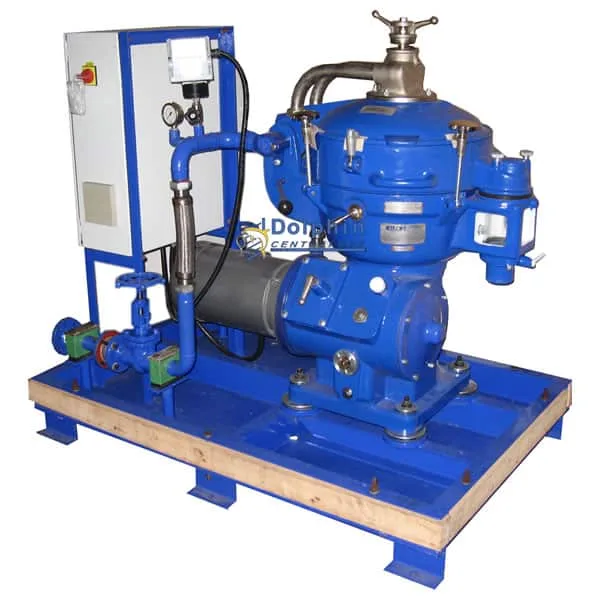
- Light phase (biodiesel): The lowest-density liquid moves toward the center of the bowl and exits through the light-phase outlet
- Heavy phase (glycerin or wash water): The higher-density liquid migrates outward and exits through the heavy-phase outlet
- Solids (sediment & soaps): The densest material collects at the bowl periphery and is ejected during sludge discharge cycles
The disc stack inside the bowl creates thin layers of fluid between each disc, dramatically increasing the effective settling area. This allows the centrifuge to separate fine particles and emulsions that gravity alone cannot handle.
A single centrifuge replaces multiple process steps — glycerin separation, wash water removal, and final polishing — all in a continuous flow-through operation.
Advantages of Centrifuge Separation
Centrifugal separation offers significant advantages over gravity settling and filtration in biodiesel production:
- Continuous process: No batch waiting — biodiesel flows through the centrifuge continuously at rated capacity
- Mechanical extraction: Total mechanical separation eliminates the need for disposable filter media or settling chemicals
- Fine sediment removal: Separates particles down to 1 micron, far beyond what filters can achieve economically
- Speed: Separation occurs in seconds rather than the hours required for gravity settling
- Automatic operation: PLC-controlled systems handle sludge ejection and process monitoring with no operator intervention
- No filter replacement: Eliminates ongoing filter media costs and the labor of filter changes
- Wash water removal: Efficiently separates wash water from biodiesel in a single pass
- Emulsion breaking: High G-force breaks stable emulsions that form during the washing process, which gravity and filters cannot resolve
If you have simple, routine questions: We have condensed our 40+ years of disc-stack centrifuge experience into 101 Frequently Asked Questions about Disc Stack Centrifuges!
Test Your Biodiesel Feedstock — Sample Testing
Send Dolphin Centrifuge a sample of your WVO or biodiesel mixture. Our engineers will run a pilot separation and report achievable purity levels before you commit to a system purchase.
Biodiesel Kit Design Features
Biodiesel production involves methanol and other chemicals that are incompatible with standard centrifuge components. Our Biodiesel Kit upgrades the centrifuge for safe, reliable operation in biodiesel environments:
VITON Seals & Compatible Elastomers
All O-rings and gaskets are replaced with VITON (fluoroelastomer) seals that resist degradation from methanol, biodiesel, and glycerin. Standard Buna-N or nitrile seals swell and fail rapidly when exposed to methanol-laden biodiesel.
Direct-Drive System
A direct-drive motor eliminates the friction clutch and belt drive found in standard centrifuges. This removes ignition sources and reduces maintenance in hazardous environments. The direct-drive also provides smoother, more consistent bowl speed.
Corrosion-Resistant Coatings
Teflon-based covers and corrosion-resistant coatings protect external components from the corrosive effects of methanol vapors and biodiesel splash. These coatings extend the service life of the centrifuge frame and housing.
C1D2 Hazardous-Area Electrical
The Biodiesel Kit includes Class I, Division 2 (C1D2) rated electrical components. This classification is required for areas where flammable vapors (methanol) may be present during abnormal conditions. All motors, starters, and controls meet or exceed C1D2 requirements.
Biodiesel Processing Applications
WVO Purification (Pre-Reaction)
Before the transesterification reaction, waste vegetable oil feedstock must be cleaned of food particles, water, and other contaminants. A centrifuge removes these impurities in a single pass, producing clean feedstock that yields higher-quality biodiesel and reduces catalyst consumption.
Glycerol Separation (Post-Reaction)
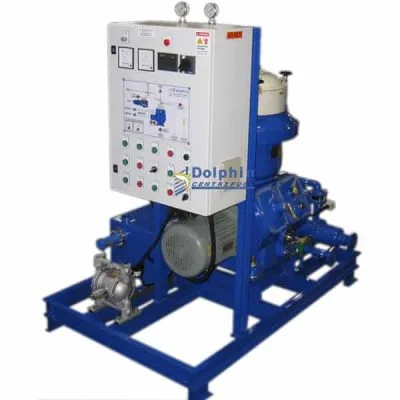
After the transesterification reaction, the mixture of biodiesel and glycerin must be separated. The centrifuge performs this separation continuously, producing clean biodiesel with minimal glycerin carryover. This is the highest-throughput application for a biodiesel centrifuge.
Wash Water Separation
Biodiesel washing with water removes residual methanol, catalyst, and soaps. The centrifuge separates the wash water from the biodiesel in a single pass, eliminating the need for extended settling. Multiple wash passes can be performed in rapid succession.
Final Polishing
A final centrifuge pass removes any remaining trace contaminants, producing biodiesel that meets ASTM D6751 quality standards. This polishing step is critical for commercial biodiesel producers who must meet fuel-quality specifications.
Glycerin Clarification
Crude glycerin separated during biodiesel production contains residual biodiesel, methanol, and catalyst. A centrifuge clarifies the glycerin for sale or further refining. Note that not all centrifuge models are suited for glycerin clarification due to the high viscosity of crude glycerin.
Biodiesel Centrifuge Specifications
The following table compares our three primary biodiesel centrifuge models. Each system is available with the complete Biodiesel Kit for safe operation in biodiesel production environments.
| Specification | DMB-007 | DMPX-028 | DMB-062 |
|---|---|---|---|
| Type | Manual Clean | Self-Cleaning | Manual Clean |
| Biodiesel Kit | Compatible elastomer seals, corrosion-resistant coating, direct-drive, hazardous-area motor | ||
| WVO Stock Purification | 3 GPM | 10 GPM | 35 GPM |
| Glycerin Separation | 6 GPM | 18 GPM | 60 GPM |
| Wash Water Separation | 3 GPM | 10 GPM | 35 GPM |
| Glycerin Clarification | 5 GPM | Not Suitable | 40 GPM |
| Drive Motor | 2 HP | 10 HP | 15 HP |
| Bowl Speed | 7,500 RPM | 6,400 RPM | 6,700 RPM |
| Sludge Space | 0.325 gal | 1.3 gal | 2.0 gal |
Note: The DMPX-028 self-cleaning model is ideal for glycerin separation due to its automatic sludge ejection. The DMB-007 and DMB-062 manual-clean models are better suited for WVO purification and wash water separation where sludge loads are lower.
Available Biodiesel Centrifuge Systems
In addition to the models above, the following manual-clean centrifuge systems are also available for biodiesel processing. Contact us for exact capacity ratings based on your specific feedstock and process conditions:
| Specification | DMB-019 | DMB-028 | DMB-037 |
|---|---|---|---|
| Type | Manual Clean | Manual Clean | Manual Clean |
| WVO Stock Purification | 5 GPM | 10 GPM | 15 GPM |
| Glycerin Separation | 10 GPM | 20 GPM | 30 GPM |
| Wash Water Separation | 5 GPM | 10 GPM | 15 GPM |
All systems are available with the complete Biodiesel Kit. Contact our engineers for help selecting the right centrifuge for your biodiesel production capacity and feedstock type.
Biodiesel Centrifuge Photo-Gallery
Alfa Laval MAB 205
| Capacity | 15 GPM on Biodiesel Glycerin |
| Motor Power | 5 HP |
| Voltages | 230 / 460 3-Phase |
| Size | 4' x 5' |
| Weight | 2,000 Lbs |
| Options | Teflon Coated Covers |
Alfa Laval MAB 206
| Capacity | 25 GPM on Biodiesel Glycerin |
| Motor Power | 7.5 HP |
| Voltages | 230 / 460 3-Phase |
| Size | 4' x 6' |
| Weight | 2,500 Lbs |
| Options | Teflon Coated Covers |
Alfa Laval MAB 207
| Capacity | 50 GPM on Biodiesel Wash Water |
| Motor Power | 15 HP |
| Voltages | 230 / 460 3-Phase |
| Size | 5' x 5' |
| Weight | 2,800 Lbs |
| Options | VITON O-Rings |
Related resources: WVO Centrifuge Separator | Centrifuge FAQ (101 Questions) | Sample Testing Program | Disc Stack Centrifuge Overview | How to Pick the Right Centrifuge
Frequently Asked Questions
What role does a centrifuge play in biodiesel production?
Does a biodiesel centrifuge need special modifications?
What is the capacity of a biodiesel centrifuge?
Can a centrifuge help biodiesel meet ASTM D6751 standards?
What is the Biodiesel Kit and why is it necessary?
Ready to Scale Your Biodiesel Operation?
Dolphin Centrifuge supplies complete biodiesel centrifuge systems — from WVO purification through glycerin separation, wash water removal, and final polishing. Based in Warren, Michigan.