Dolphin Centrifuge technical guide to disc stack centrifuge operating water — the hydraulic medium for self-cleaning bowl ejection. Supply requirements: 2.5–6 bar pressure, hardness below 200 ppm CaCO3. Covers quality specs, solenoid valve maintenance, and troubleshooting.
What is Disc Stack Centrifuge Operating Water?
All self-cleaning disc-stack centrifuges have a hydraulic mechanism that operates the sludge ejection system. The centrifuge uses water as the medium of operation of this system, known as centrifuge operating water.
Summary: Operating water (also called ejection water, seal water, or hydraulic water depending on the machine manufacturer's terminology) is supplied to the underside of the sliding bowl bottom to create the hydraulic force that opens and closes the bowl for sludge ejection. Problems with operating water are among the most frequent causes of disc centrifuge operational failures, including failed ejections, continuous bowl leaking, and premature seal wear.
What Operating Water Does: The Hydraulic Ejection Mechanism
In a self-cleaning disc centrifuge, the bowl's sludge is discharged through a unique hydraulic mechanism. The bowl body consists of two main parts: the bowl shell (top) and the sliding bowl bottom (bottom), which can move axially (up and down).
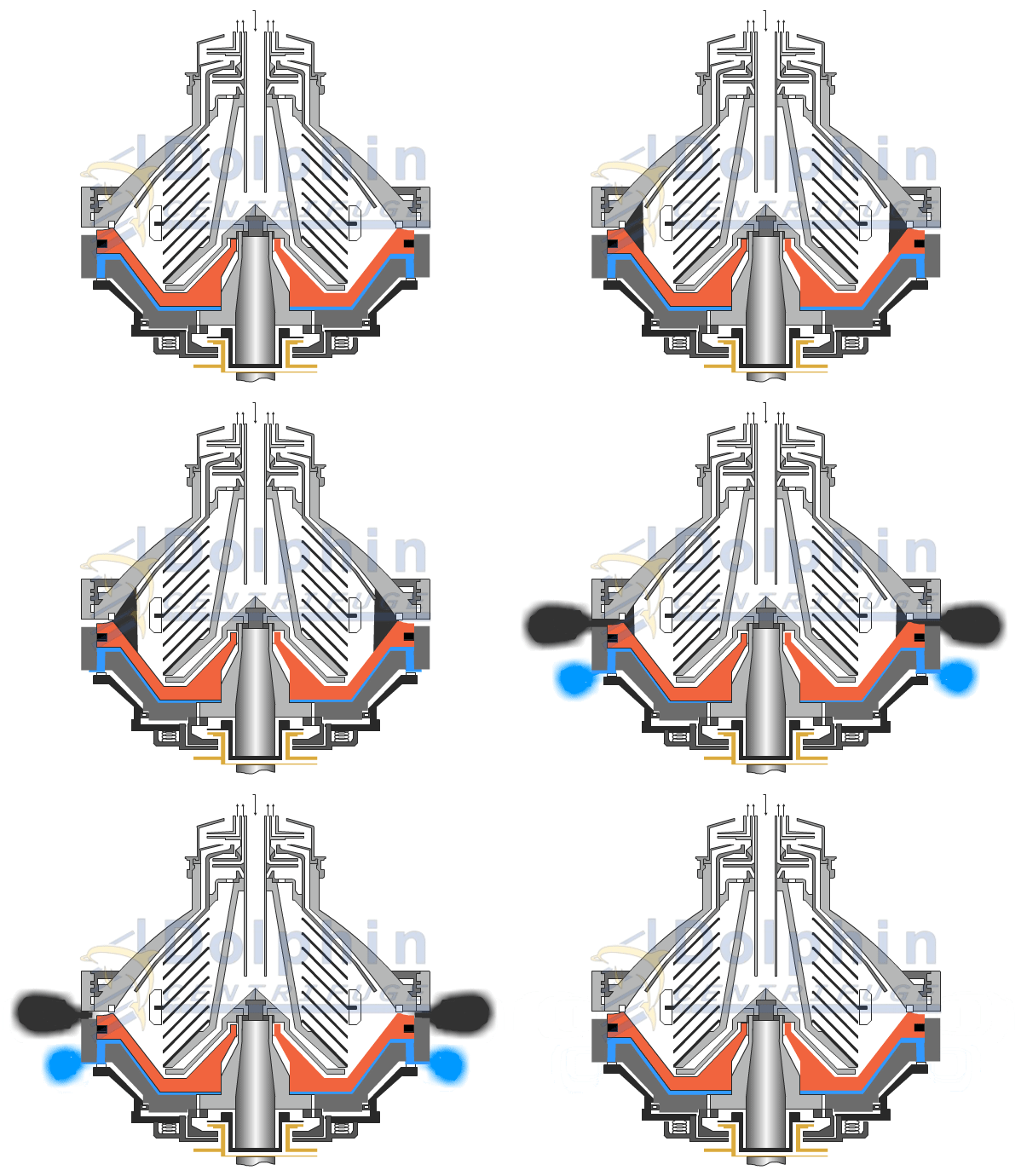
During normal operation (bowl closed): Operating water fills the chamber below the sliding bowl bottom. The centrifugal force acting on this water creates a hydraulic upward pressure that holds the sliding bowl bottom firmly against the bowl body, sealing the sludge discharge slots closed. Process fluid cannot escape from the bowl periphery.
During ejection (bowl open): The operating water is released (drained) from the chamber below the sliding bowl bottom. Without the hydraulic upward pressure, the centrifugal force of the bowl contents pushes the sliding bowl bottom downward. The discharge slots open and all sludge (and in a total ejection, all bowl contents) discharges outward through the slots in a fraction of a second.
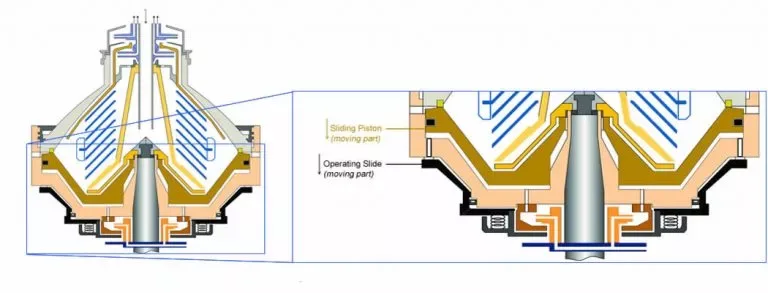
After ejection (bowl re-closing): Fresh operating water is re-admitted to the chamber. Hydraulic pressure builds, pushing the sliding bowl bottom back up and closing the bowl. The re-sealing sequence typically takes 2–5 seconds.
Where Does the Operating Water Come From?
Centrifuges manufactured by different manufacturers have specific requirements for the operating water. Most centrifuges need operating water at a specific pressure and flow rate.
A specially designed water handling system is an integral part of any self-cleaning centrifuge. This sub-assembly is known as the Water Harness or Operating Water Manifold.
Water Harness or Operating Water Manifold
The water harness of a self-cleaning centrifuge is an assembly of solenoid valves with pressure reducers to regulate the water pressure. This assembly connects to the centrifuge through flexible hoses.
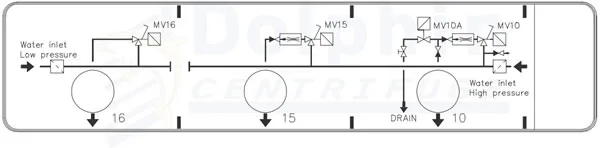
There are multiple water outlets on this manifold that connect to the corresponding ports on the centrifuge frame. The water pressure regulators allow for adjustment of the water pressure. The harness also includes ball valves to regulate the water flow rate.
The centrifuge controller triggers the solenoid valves of the water harness based on a sequence of operations. For example, on startup, the bowl-close solenoid opens, allowing closing water to enter the closing water chamber. This action closes the bowl enabling it to process the fluid. When it is time for sludge ejection, the bowl open solenoid opens to inject a high-pressure pulse of water into the centrifuge bowl operating water space, pushing the operating slide downward to open the bowl and discharge the sludge.
How Much Operating Water Does a Centrifuge Use?
The amount of operating water used by a centrifuge is a function of the bowl size and centrifuge type. For example, a typical medium-capacity disc centrifuge uses approximately 1–2 gallons of water to close the centrifuge bowl. The same centrifuge uses about 1 gallon of water to discharge the sludge.
Operating Water Volume Requirements
The centrifuge bowl requires a preset amount of water to close. It is important to note that a provision within the operating chamber allows some of this water to escape.
If the volume of incoming water is not sufficient, the water cannot build up in the bowl to cause the sliding piston to rise and close the bowl.
Issues caused by insufficient volume: Insufficient operating water volume prevents the centrifuge bowl from closing. The bowl's failure to close leads to the process fluid exiting the bowl through the sludge outlet, which is undesirable.
Operating Water Quality Requirements
Operating water must meet specific quality standards. Non-compliant water causes scale buildup, corrosion, blocked orifices, and erratic bowl behavior. The operating water stays in the bowl operating chamber and over time some of this water evaporates. If the operating water has dissolved minerals, these impurities are left behind as crystallized deposits in the bowl operating space. Similarly, sediment from unfiltered water deposits in the operating water system and prevents the operating slide from moving freely.
Required water quality parameters:
- Clarity/turbidity: Clean, particle-free water. Suspended solids block the small-diameter orifices and nozzles in the operating water circuit. Use a 100-mesh (150 micron) or finer inline strainer on the operating water supply.
- Hardness: Low hardness preferred. Hard water (above 200 mg/L CaCO3) will deposit calcium carbonate scale in the water chambers and on the sliding bowl bottom sealing faces. Scale causes erratic bowl behavior and seal damage. Use softened water where hardness is an issue.
- Chloride content: Chloride causes stress corrosion cracking in stainless steel bowl components. For stainless steel bowls, operating water chloride content should be below 50 ppm. Never use seawater or brackish water as operating water unless the machine is specifically designed for it.
- Temperature: Operating water should be at or near ambient temperature. Hot water causes thermal expansion issues and reduces its density, affecting the hydraulic balance of the sliding bowl bottom mechanism.
- pH: Neutral to slightly alkaline (pH 6.5–8.5). Acidic water causes corrosion of the water circuit components.
Operating Water Pressure Requirements
Operating water must be supplied at adequate pressure for the machine's ejection mechanism to function correctly. Insufficient pressure causes failed ejections or incomplete re-sealing. Excessive pressure causes premature bowl opening or operating water overfill leaks.
Typical pressure requirements:
- Small disc centrifuges (bowl diameter under 250 mm): 2.5–3.5 bar (36–51 PSI) at the machine inlet
- Medium disc centrifuges (bowl diameter 250–400 mm): 3.5–5.0 bar (51–73 PSI) at the machine inlet
- Large disc centrifuges (bowl diameter above 400 mm): 4.5–6.0 bar (65–87 PSI) at the machine inlet
These are typical ranges only — consult the specific machine technical manual for the exact requirement. Pressure must be measured at the machine inlet connection, not at the supply header, to account for pressure drop in the supply piping.
Pressure measurement point: Install a pressure gauge at the machine operating water inlet connection. Check the pressure with the ejection solenoid valve open (active ejection) — this is the dynamic pressure under flow conditions, which is the relevant value. Static (no-flow) pressure is always higher and does not indicate whether the supply can maintain pressure during an ejection.
Operating Water Temperature
Given that the operating water is close to the process fluid chamber, the operating water temperature affects the process fluid directly. The effects of operating water temperature are primarily related to the heat loss of the process fluid from cold operating water.
In rare cases, if the process fluid is at a low temperature, hotter operating water can indirectly heat the process fluid affecting the process efficiency.
Minimum temperature: For the operation of the hydraulic mechanism of the sludge ejection system, the operating water needs to be in a liquid state. If the operating water temperature falls below 0 °C, the water will freeze. The freezing of this water will prevent it from flowing and working the hydraulic system.
Maximum temperature: The maximum operating water temperature cannot be above the boiling point of water. If the operating water boils, the steam generated will cause the centrifuge to malfunction since steam cannot operate the hydraulic mechanism.
Warning: Partially frozen operating water can cause an imbalance in the bowl that can lead to excessive centrifuge vibration. In some cases, this can lead to a catastrophic failure of the centrifuge and possible injury to the operator.
Low Operating Water Pressure: Causes & Effects
Effects of low pressure:
- Incomplete or failed bowl ejection — sludge accumulates and eventually overflows into the disc stack
- Slow or incomplete bowl re-sealing after ejection, causing product leaking from the discharge ports between ejections
- On machines with a closing water timer, the bowl may not fully close within the allotted time, triggering a fault alarm
Common causes of low pressure:
- Undersized supply pipe creating excessive pressure drop under flow
- Partially closed supply valve or a failing pressure regulator in the supply line
- Scale or debris buildup inside the supply piping reducing effective bore diameter
- Other equipment drawing from the same supply header simultaneously, reducing available pressure
- Clogged inline strainer (check and clean at every preventive maintenance visit)
Fix: Measure pressure at the machine inlet during an ejection cycle. If below specification, identify the pressure drop source. Clean strainers, verify valve positions, and check supply pipe sizing against the machine's flow rate requirement. A dedicated operating water supply with its own pressure regulator is the most reliable configuration.
Scale Buildup in the Operating Water Circuit
How scale causes problems: Calcium carbonate and magnesium scale deposits from hard water accumulate on the internal surfaces of the water circuit: solenoid valve orifices, nozzles, the water chamber in the bowl bottom, and on the sealing faces of the sliding bowl bottom. Scale on sealing faces prevents the bowl from closing completely, causing continuous leaking. Scale in orifices and nozzles restricts water flow, causing slow re-sealing and erratic ejection behavior.
Detection: Inspect the water circuit components during every major overhaul. White or gray deposits on internal water circuit surfaces confirm hard water scale. Bowl leaking that cannot be corrected by O-ring replacement may be caused by scale on the sliding bowl bottom sealing face.
Removal: Scale can be dissolved with a dilute acid solution (5–10% citric acid or a commercial descaling chemical). Soak affected components for 30–60 minutes, then rinse thoroughly with clean water. Never use strong mineral acids (hydrochloric acid) on stainless steel bowl components — chloride attack can cause stress corrosion cracking.
Prevention: Use softened water or deionized water for operating water supply where water hardness is above 150 mg/L. Install a water softener or scale inhibitor dosing system on the operating water supply header.
Solenoid Valve Maintenance
The solenoid valves in the operating water circuit are the most active mechanical components on the centrifuge, opening and closing thousands of times per year. They are a common failure point that causes erratic ejection behavior, continuous bowl leaking, or complete loss of ejection capability.
Common solenoid valve failures:
- Valve stuck open: Water continuously supplied to the bowl causes the bowl to remain open (continuous ejection/leaking) or overfills the bowl.
- Valve stuck closed: No water reaches the bowl; ejection cannot occur. Sludge accumulates continuously until the machine fails.
- Valve leaking past the seat: Small continuous flow through a closed valve gradually fills the bowl water chamber when it should be empty, causing unexpected bowl opening between programmed ejection cycles.
- Sluggish valve: Coil wear, low voltage, or partial blockage by debris causes delayed opening or closing. Ejection timing becomes erratic and inconsistent.
Maintenance schedule: Inspect and clean operating water solenoid valves every 2,000 hours or annually. Replace solenoid valve coils at the first sign of sluggish operation. Replace complete valves every 3–5 years or whenever the valve body or seat shows wear. Dolphin Centrifuge stocks replacement solenoid valves for all major disc centrifuge models.
Operating Water Circuit Troubleshooting
Bowl does not eject: Check operating water pressure (must meet minimum at machine inlet during ejection). Check solenoid valve coil with a multimeter — coil resistance should match specification. Manually override the solenoid valve to confirm hydraulic function independent of the electrical control. Check for scale or debris blocking the water inlet orifice.
Bowl leaks continuously (not at ejection): Check for a stuck-open solenoid valve on the closing water circuit. Inspect the sliding bowl bottom O-rings. Check for scale on the sealing faces. Verify operating water pressure is not too high (causing overfill leaking). See the full bowl leaking troubleshooting guide for a systematic approach.
Ejection alarms but bowl never fully opens: Low pressure is the most common cause. Check pressure during the actual ejection event. Also check for scale buildup on the sliding bowl bottom that prevents it from moving freely.
Bowl opens at unexpected times (spontaneous ejection): A leaking solenoid valve in the closing water circuit allows the closing water chamber to drain slowly. When pressure drops below the holding threshold, the bowl opens spontaneously. Replace the leaking valve immediately — uncontrolled ejections can cause product loss and liquid seal breakover.
Using Other Fluids or Gases Instead of Water
Water may not be suitable for specific applications. Customers often ask if they can use other fluids instead of water to operate the centrifuge bowl. Self-cleaning disc centrifuges are specifically designed to use water as the operating medium. Considering the extremely high centrifugal force experienced by the bowl, it is crucial to use the correct fluid for the system’s operation.
Air or other gases do not have the density to generate the required pressure to operate the hydraulic mechanism. Therefore gases cannot work for the operating system. If water is unavailable or unsuitable for your application, consult the centrifuge manufacturer for guidance on approved operating fluid alternatives for your specific machine model.
Used Operating Water Discharge
The operating water (opening and closing) intermittently exits the centrifuge through a specific frame drain. The water drains out under gravity and does not have any inherent pressure. Therefore, the operating water drain should always connect to a hose or pipe with a downward slope.
Connecting the operating water drain to an upward-sloping hose or pipe will cause the operating water to back-flow into the centrifuge bowl frame. The water will collect in the bowl casing and cause a drag on the rotating bowl, slowing the bowl and leading to many operating issues. The collected water will also enter the operating water space, causing malfunctioning of the sludge discharge mechanism.
Quality of Discharge Water
The discharged water is typically contaminant-free if the centrifuge is functioning normally. However, in case of a centrifuge failure or malfunction, the discharged operating water may carry the process fluid — often oil. This discharge water is contaminated and needs appropriate handling.
Disposal
A clean operating water discharge is fit for disposal in the regular drain. However, if oil or some other fluid contaminates the exiting operating water, it cannot be disposed of in the drain and should be disposed of in accordance with local regulations for oily waste.
Reuse
Fresh, clean water is not always available in abundance. In remote field locations, it can be hard to find clean, potable water. In such cases, reuse of the used operating water is desirable. If the centrifuge is in good working condition, the operator can reuse the exiting operating water. If the operating water is contaminated with the process fluid, the exiting water may be collected and decanted for reuse.
by Sanjay Prabhu MSME
Centrifuge Applications Engineer, Dolphin Centrifuge
Operating water problems causing downtime?
Dolphin Centrifuge stocks replacement solenoid valves, O-rings, and complete operating water circuit kits for all major disc centrifuge models. Same-day shipping available.
Frequently Asked Questions
What is operating water in a disc stack centrifuge? +
What happens if operating water pressure is too low? +
What water quality is required for centrifuge operating water? +
How do I troubleshoot operating water solenoid valve failure? +
Can operating water be reused in a disc stack centrifuge system? +
Need Operating Water Circuit Parts or Service?
Dolphin Centrifuge stocks solenoid valves, O-rings, and complete operating water circuit rebuild kits. Call (248) 522-2573 or request support online.