
Dolphin Centrifuge supplies explosion-proof disc stack centrifuge systems certified for Class 1 Div 1, Class 1 Div 2, ATEX Zone 1/2, and IECEx hazardous areas. Featuring sparkless direct-drive transmissions and nitrogen-purged enclosures for petroleum refineries, offshore platforms, and solvent extraction facilities.
Synopsis
Industrial centrifuge applications need not be limited by the location or environment being unacceptable for standard machinery. Specially designed centrifuges are safe to install in potentially hazardous environments. In this article, we discuss various considerations and solutions for applying centrifuges in dangerous locations.
Explosion Proof Centrifuge
An explosion-proof centrifuge is a specially designed and manufactured industrial centrifuge for operating in hazardous locations. The possibility of the presence of explosive gases or particles designates specific environments as unsafe. A centrifuge that can safely process under such conditions is classified as explosion-proof.
Many industrial applications process fluids that have a low flash point and are flammable. In other words, liquids that can easily ignite need specially designed equipment to operate safely. Sub-classifications within this category of hazardous environments depend on the type and presence of such flammable materials.
Authorized governing bodies define specific details on area classifications. This UL documentation provides detailed hazardous area classification criteria.
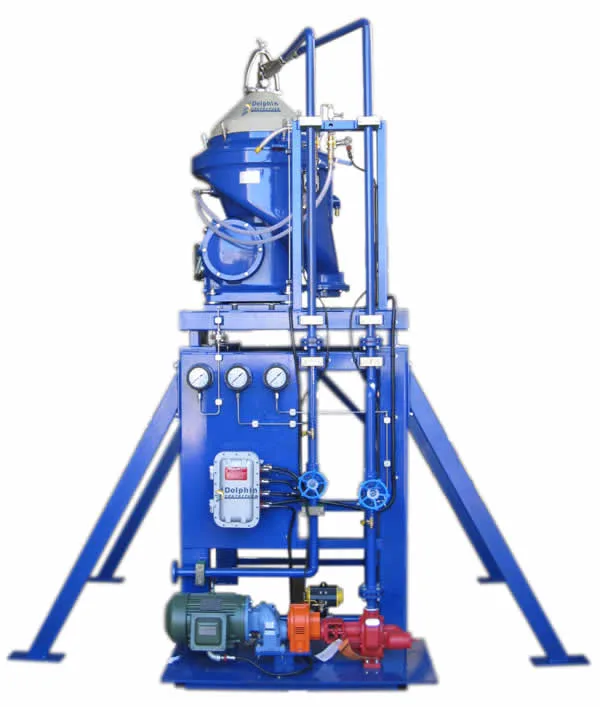
Class 1 Div 1 — Explosion Proof Centrifuge
Applications Requiring Area Classified Centrifuges
Class 1 Division 1 Centrifuge Applications
Class 1 Division 1 areas are classified as locations where explosion or fire hazards exist due to the presence of flammable gases, flammable or combustible liquid-produced vapors, combustible dust, or ignitable fibers or flyings.
The following are typical examples of such explosion-proof centrifuge applications. We briefly describe the considerations for centrifuge execution for petroleum refineries.
Centrifuge for Petroleum Refineries
Crude oil refineries process crude oil feedstock to produce final products such as solvents, condensate, gasoline, diesel, naphtha, kerosene, etc. All of these petroleum components are flammable and therefore require safe processing by using explosion-proof centrifuges.
The hazardous area classification of the centrifuge depends on the actual location of the centrifuge. If the centrifuge is in an area in the presence of flammable liquids, vapors, or gases, it needs to be suitable for the Class 1 Div 1 environment.
The photograph shown here illustrates an Alfa Laval MAB-103B24-60 Centrifuge suitable for NEC Class 1 Division 1 Groups C & D hazardous area installation.
On the other hand, if the centrifuge application is in a relatively safer area where such flammable material is not usually present, a Class I Div 2 certified centrifuge may be adequate, like the one shown below.
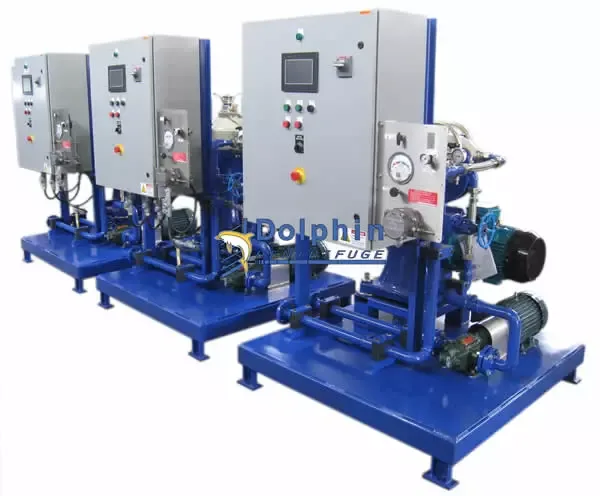
Diesel Centrifuge — Class 1 Div 2 Explosion Proof
Class 1 Div 1 Explosion Proof Centrifuge — Offshore Gas Platform
Similarly, an Offshore Oil and Gas Platform centrifuge system could require a specific hazardous area classification based on the final installation location.
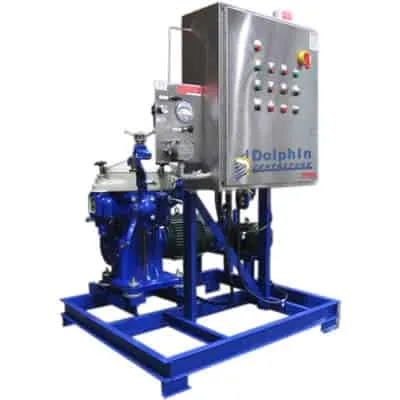
Class 1 Div 2 Diesel Centrifuge — Offshore Platform
Class 1 Division 2 (C1D2) Hazardous Area Centrifuge Applications
Class 1 Division 2 areas are classified as locations where volatile flammable liquids or flammable gases or vapors exist but are generally confined within closed containers.
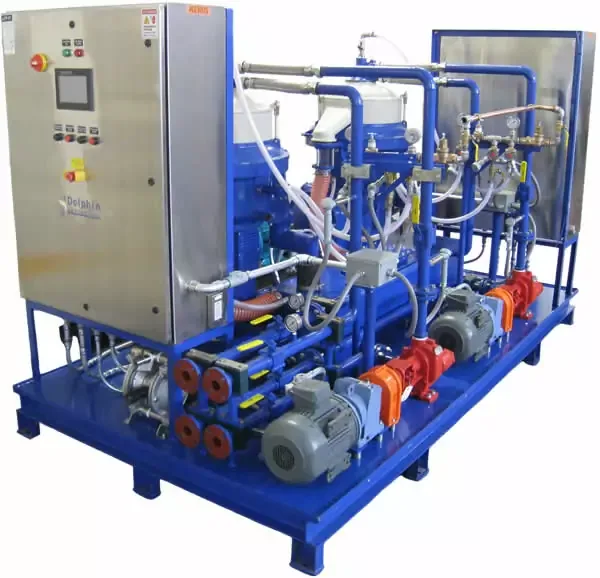
DMPX-028 Class 1 Div 2 Duplex Diesel Centrifuge Module
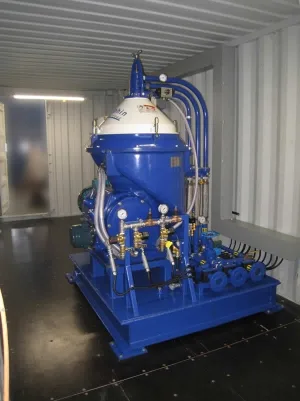
Centrifuge Class 1 Div 2 — Crude Oil
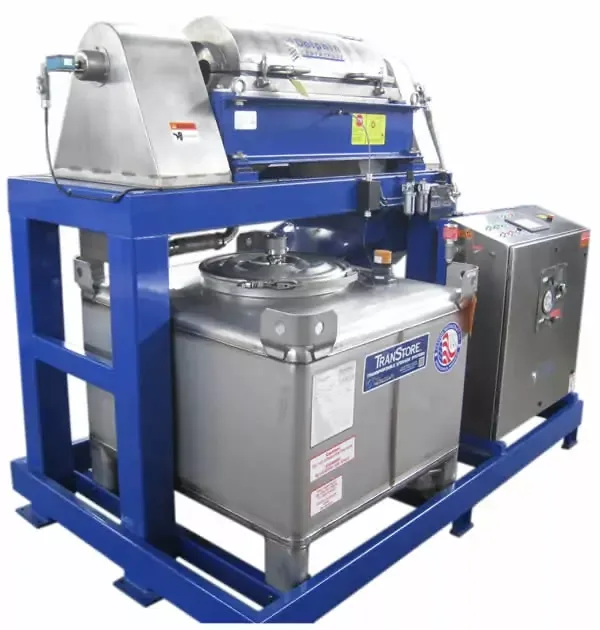
Stainless Steel (Food Grade) Decanter — C1D2 Alcohol Processing
The following example illustrates the explosion-proof equipment considerations for the Hemp CBD Oil industry.
Hemp Ethanol Extraction Centrifuge
Alcohol is the solvent of choice for CBD Oil extraction from hemp plants. Ethanol alcohol has a low flash point and is considered a hazardous fluid. Therefore, decanter centrifuges used for hemp biomass separation from ethanol must meet hazardous area certification.
The image shown here is that of an Alfa Laval Class 1 Div 2 Hemp Extraction Centrifuge.
Since the hemp solvent extraction is a closed (isolated from the environment) system, Class 1 Div 2 certified components are adequate for such locations. Suppose the hemp producer uses a hydrocarbon-based solvent as the extraction medium. In that case, careful consideration and professional consultation are recommended to identify and implement the right hazardous area classification.
Another very similar application is for THC extraction from cannabis using solvents or ethanol.
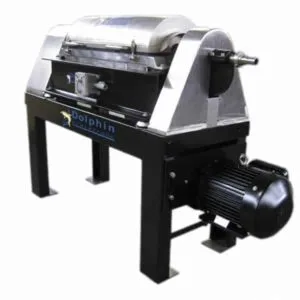
Large Volume Hemp Centrifuge — Explosion Proof — 40 GPM
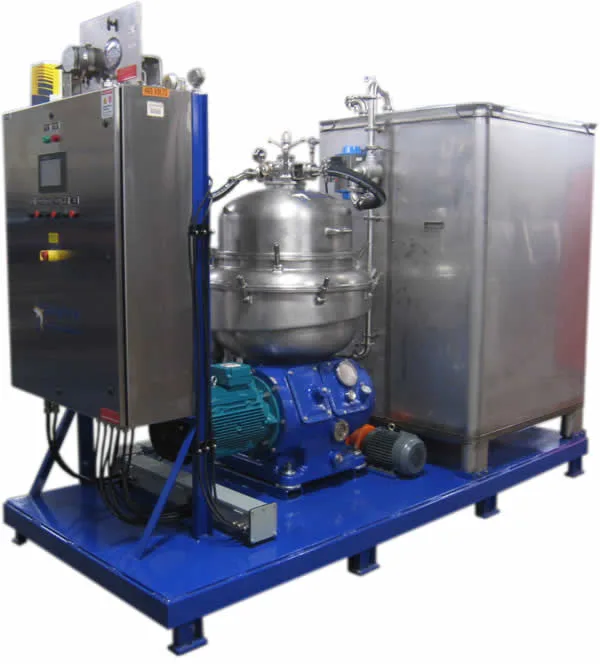
Disc Stack Centrifuge — Stainless Steel Explosion Proof
Uses for Purged Centrifuges
In specific applications, the centrifuges may be purged with an inert gas to blanket the internals. This constant purging prevents the buildup of vapors from the process fluid. This purging is an added safety measure. This methodology also helps in cases where the gases or odors are a potential health hazard for the local operators.
An inert gas purging system coupled with a low vacuum venting system helps prevent the operating area from being free of such gases and odors.
For example, centrifuges operating on crude oil tank bottoms could potentially be inert gas purged and vented to alleviate the presence of hydrogen sulfide gas in the operating area.
Inert gas blanketing isolates the process fluid from the atmosphere to prevent oxidation and related chemical deterioration. Centrifuges used to process wine and beer must keep the process fluid away from the air to prevent oxidation. This application is an example of purging for a non-hazardous centrifuge application.
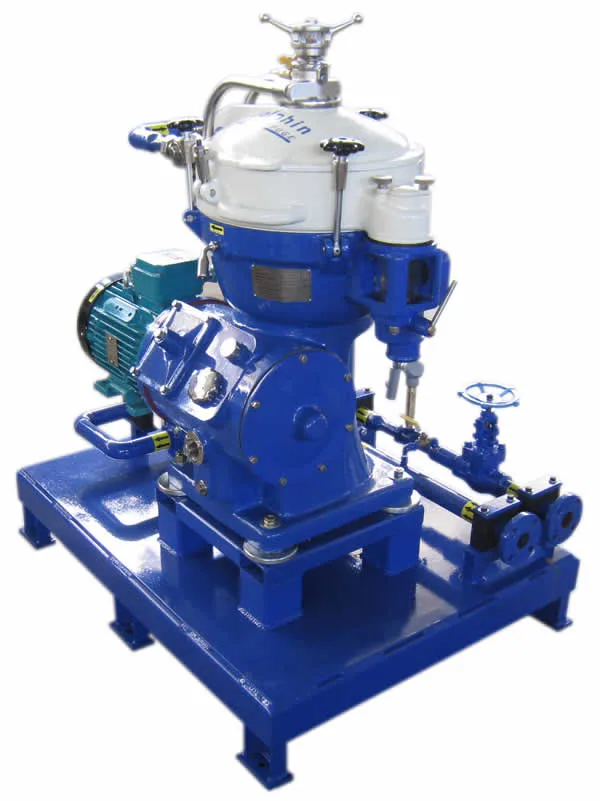
Disc Stack Centrifuge — Explosion Proof Class 1 Div 2
Electrical Standards for Explosion-Proof & Hazardous Areas
Depending on the region, different types of hazardous area classifications apply to specific area locations. We have broadly summarized the three primary systems of classification in use worldwide. Again, specific details on each guideline are on the included links under each heading.
N. America (NEC / CEC)
Permissible components for use in hazardous areas in N. America must comply with requirements issued by NEC (National Electrical Code) and CEC (Canadian Electrical Code) standards.
The UL system designates Classes and Divisions within each Class. In comparison, the new Canadian system sets zones within each Class. There are significant differences between the division and zone classifications.
UL (Underwriters Laboratories) provides certification and marking for equipment intended for use in classified hazardous locations.
Groups A, B, C, D
European Union (ATEX)
The European electrical and protective equipment certification system in Europe is commonly known as the ATEX directive. Per the official document, "Equipment and protective systems intended for use in potentially explosive atmospheres (ATEX) cover a range of products, including those used on fixed offshore platforms, petrochemical plants, mines, and flour mills, amongst others."
A typical example of an Alfa Laval centrifuge suitable for hazardous locations would be marked as ATEX II 3 G (Zone 2) II B T3. The reader can reference specific zone details in the official ATEX summary documentation.
ATEX II 3G, IIB T3
International (IECEx)
IS (International Standard) has guidelines for hazardous area designation and compliance, similar to the ATEX guidelines. The IEC (International Electrotechnical Commission) maintains these standards.
IEC 60079 Series
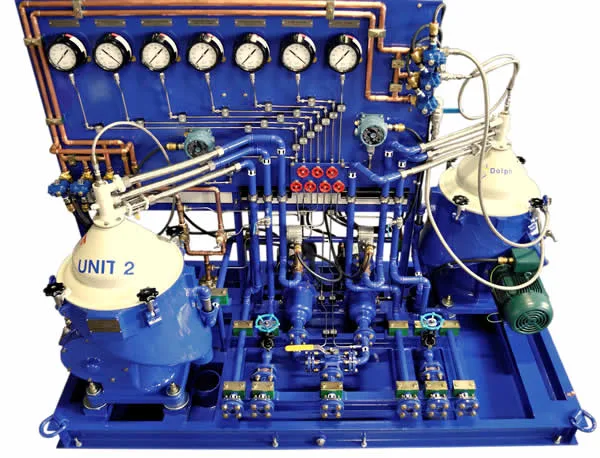
DMPX-014 Duplex Disc Stack Centrifuge Skid for HFO and Diesel — ATEX Zone 2
Electrical Modifications for Hazardous Area Centrifuges
Electrical components used on industrial centrifuges designed for hazardous areas must meet the designated classification and be certified to the same standard. These parts fall into the following categories.
Electrical Enclosures Upgrades
Industrial electrical enclosures house various electrical components, which can cause sparking during routine operations. These sparks can cause flammable gases or vapors to ignite if they are present in high concentrations. Therefore centrifuge control system enclosures need to be appropriately isolated from the surrounding environment through proper sealing.
Depending on the classification level, an inert gas purging system may be installed on the enclosure, as shown in the adjacent photograph. This device creates and maintains an inert gas atmosphere within the enclosure that prevents the ignition of flammable gases or vapors by replacing oxygen.
The next level of enclosure classification to Class I Div 1 specification involves cast metal housing designed to contain thermal events within the enclosures. Specially rated electrical fittings and joint seals isolate these containment enclosures from the surrounding environment.
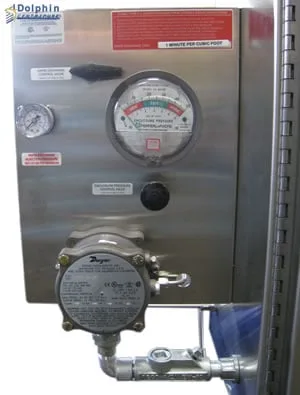
Nitrogen Purge Device
Power and Field Sensor Wiring for Classified Centrifuge Systems
Field sensor wiring refers to small gauge wires used to connect the pressure, vibration, temperature, and other sensors to the control system. Typically these are low-voltage conductors, but they still need to be routed through a rigid conduit with specialized fittings and glands. These fittings are sealed at the instrument and control panel to prevent the ingress of gases or vapors into the device or control enclosure.
Similar guidelines apply to power wiring that supplies power to components such as centrifuge drive motors and process fluid heaters. Power wiring also requires routing through approved conduits and truncated with certified and sealed glands.
Field Instruments, Components, and Gages for XP Centrifuges
Field instruments or sensors are required for the reliable operation of centrifuges. These sensors include temperature, pressure, level, and flow sensors, which must be certified by the relevant authority to meet the applicable classification requirements.
Another component widely used on centrifuges is solenoid valves. Specific solenoid valves are certified for hazardous area applications and allowable for use in such applications.
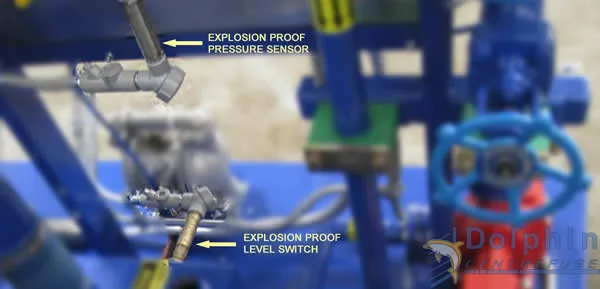
Explosion Proof Sensors — ADDAX Diesel Centrifuge
Mechanical Modifications for Explosion-Proof Centrifuges
Centrifuge Drive Modification — Spark-less Clutches
Industrial centrifuges have friction clutches as part of the main power transmission, which uses a rotating friction element mounted on a steel shoe. This assembly contacts the centrifuge drum and transmits the torque through friction.
In case of excessive wear of the friction elements, the steel components contacting each other at high speed can cause sparking. Therefore, these steel shoes are sometimes replaced with brass or other non-ferrous metal. Friction between steel and brass components prevents sparks from being generated.
Direct Coupling of Centrifuge Drive
Direct coupling of the drive components is the preferred way to avoid the clutch sparking issue. In this modification, a coupling disc bolted to the horizontal shaft drum replaces the rotating clutch assembly.
However, this adaptation also means that the drive motor has to overcome the entire rotating mechanism's inertia, including the heavy bowl assembly. Therefore, a power inverter in the control system is a part of the adaptation. An inverter allows the motor to ramp up to operating speed over a defined time window without drawing excessive current.
Other Upgrades
Pressure gauges made for hazardous area applications have a blow-out-back type design. This feature allows for the specially designed back of the indicator to pop out under excessive pressure and prevent any possible injury or damage.
Vibration sensors detect excessive vibration of horizontal decanter centrifuges to affect system shutdown in case of excessive shaking, which could indicate severe mechanical malfunction.
Other redundant safety devices, such as bearing temperature monitors, pressure relief valves, process area venting systems, etc., may be recommended based on the process and operating environment.
Summary
Based on the above, we can summarize that industrial centrifuges are suitable for explosion-proof classified areas with proper design considerations. Actual hazardous area specifications depend on the installation location and are governed by the appropriate regional authority.
Need an Explosion-Proof Centrifuge?
Dolphin Centrifuge supplies Class 1 Div 1, Class 1 Div 2, ATEX, and IECEx certified systems for refineries, offshore platforms, and chemical processing.
Frequently Asked Questions
What is an explosion-proof centrifuge? ▼
An explosion-proof centrifuge is a specially designed and manufactured industrial centrifuge for operating in hazardous locations. The possibility of the presence of explosive gases or particles designates specific environments as unsafe. A centrifuge that can safely process under such conditions is classified as explosion-proof. These centrifuges feature certified electrical enclosures, sparkless drive mechanisms, and specialized sensors and wiring to prevent ignition of flammable materials.
What is the difference between Class 1 Div 1 and Class 1 Div 2 centrifuges? ▼
Class 1 Division 1 areas are locations where explosion or fire hazards exist due to the continuous presence of flammable gases, combustible liquid-produced vapors, combustible dust, or ignitable fibers. Class 1 Division 2 areas are locations where volatile flammable liquids or flammable gases exist but are generally confined within closed containers. Class 1 Div 1 centrifuges require more stringent modifications including cast metal housings and fully sealed enclosures, while Class 1 Div 2 centrifuges may use nitrogen-purged enclosures.
What electrical modifications are needed for a hazardous area centrifuge? ▼
Hazardous area centrifuges require several electrical modifications: upgraded enclosures with inert gas purging or cast metal containment housings, rigid conduit routing with specialized fittings and sealed glands for both sensor and power wiring, and certified field instruments including temperature, pressure, level, and flow sensors rated for the applicable classification. Solenoid valves must also be certified for hazardous area use.
How are centrifuge drives modified for explosion-proof applications? ▼
Two primary mechanical modifications address spark risk in centrifuge drives. First, standard steel friction clutch shoes can be replaced with brass or other non-ferrous metals to prevent sparking during contact. Second, and preferred, the friction clutch can be eliminated entirely through direct coupling using a coupling disc bolted to the horizontal shaft drum. Direct coupling requires a power inverter (VFD) to allow the motor to ramp up to operating speed over a defined time window without drawing excessive current.
What hazardous area certifications are available for industrial centrifuges? ▼
Industrial centrifuges can be certified under three primary classification systems: NEC/CEC (North America) with Class and Division designations, ATEX (European Union) with Zone designations for explosive atmospheres, and IECEx (International) maintained by the International Electrotechnical Commission. Dolphin Centrifuge provides centrifuge systems certified to all three standards depending on the installation region and requirements.
Test Your Hazardous Fluid — Sample Analysis
Send us a sample of your process fluid and Dolphin Centrifuge engineers will assess centrifuge separation feasibility for your specific hazardous application.
Request Sample Testing →Related Articles
Need an Explosion-Proof Centrifuge for Your Facility?
Dolphin Centrifuge supplies Class 1 Div 1, Div 2, ATEX, and IECEx certified centrifuge systems for petroleum refineries, offshore platforms, and chemical processing.