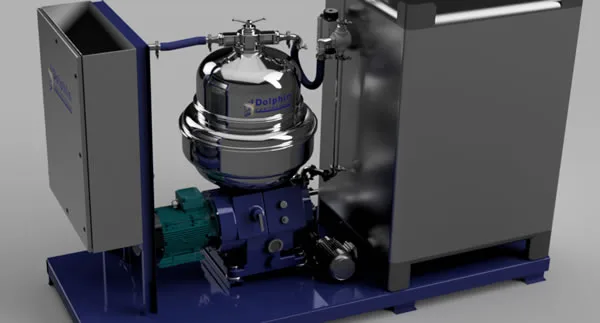
Dolphin Centrifuge supplies explosion-proof stainless steel disc stack centrifuges rated UL Class 1 Div 2 for hazardous areas. These 316L SS systems generate 6,800 Gs at 100 GPM, serving refineries, offshore platforms, and food-grade solvent extraction. Based in Warren, Michigan with over 40 years of experience.
Overview
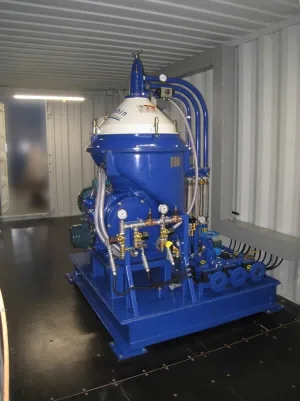
Alfa Laval 3-Phase Centrifuge Class 1 Div 2 Crude Oil
An explosion-proof stainless steel centrifuge is a disc-stack type separator designed for the continuous separation of solids from liquids. This centrifuge can separate immiscible liquids for the pharmaceutical and chemical industries that require explosion-proof centrifuges.
The combination of stainless steel construction and explosion-proof execution is unique for centrifuges. The stainless steel contact makes these centrifuges suitable for corrosive and food-grade applications.
Making these centrifuges explosion-proof allows their use for flammable fluids and other hazardous conditions. These conditions could include the presence of flammable gases or other explosive chemicals.
Applications
Explosion-proof centrifuges with stainless steel construction find uses in special industries and locations. Some of these applications and locations are listed below.
Refineries
Petroleum refineries are one such location where flammable gases and liquids are often present. Crude oil processing produces a range of flammable fluids such as gasoline, distillate, solvents, etc. Besides, natural gas is quite often present in and around refineries.
Therefore, refineries, in general, need the highest classification of explosion-proof centrifuge equipment.
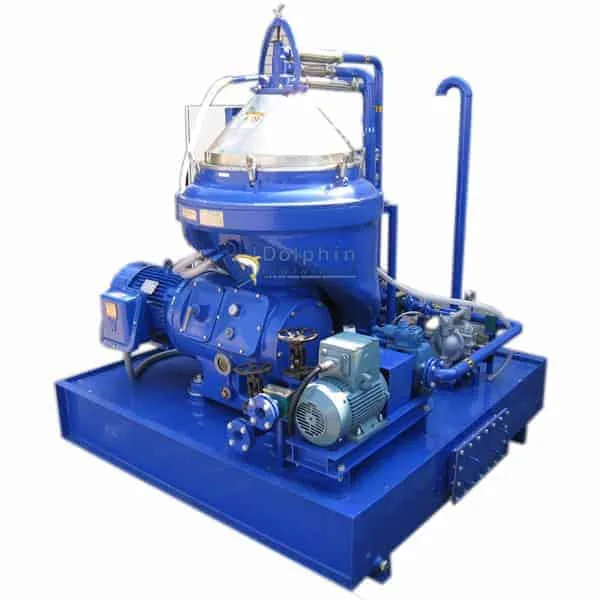
Explosion Proof Centrifuge for Refinery Distillate
Offshore Platforms
Offshore oil and gas platforms are locations where the presence of explosive fluids and gases is pervasive. The use of explosion-proof centrifuges in such locations is mandatory.
Also, offshore platforms are corrosive environments due to the presence of saltwater. The use of corrosion-resistant materials is also necessary. Stainless steel centrifuges offer a high level of corrosion resistance and are, therefore, desirable under such conditions.
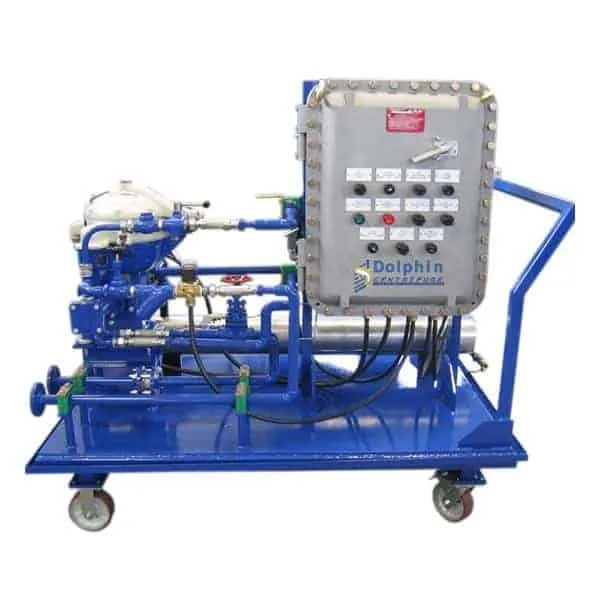
Explosion Proof Centrifuge - Gas Power Plant
Solvent-Based Extraction
Solvent-based extraction processes use alcohol or petroleum-based solvents as the primary extraction fluid. Petroleum-based solvents are highly flammable and require the use of explosion-proof centrifuges. Ethanol alcohol is also flammable though not in the same category as solvents.
Either case requires using hazardous-area suitable (C1 D2) or explosion-proof centrifuges.
Extracts intended for human consumption require stainless-steel food-grade centrifuges as a baseline requirement.
Thus the processing of botanical or herbal extracts using solvents requires stainless-steel explosion-proof centrifuges.
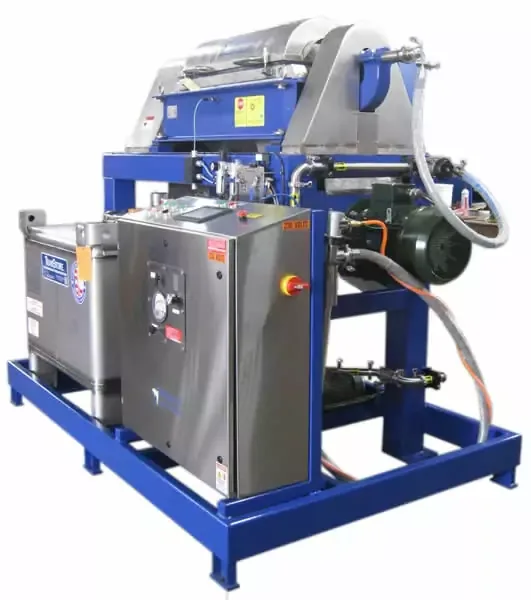
Alfa Laval Decanter Centrifuge System - Class 1 Div 2 for Herbal Extraction
Chemical Processing
Chemical processing often uses solvents for hydrocarbon-based extraction. These applications could be precipitate extraction or solvent extraction through distillation. Since hydrocarbon solvents are present in such processing, using explosion-proof extraction centrifuges is essential.
Additionally, chemical extraction can be highly corrosive depending on the type of chemical process. The corrosive environment mandates the use of corrosion-resistant material, which is often stainless steel. Therefore, stainless-steel explosion-proof centrifuges find various applications in the chemical industry.
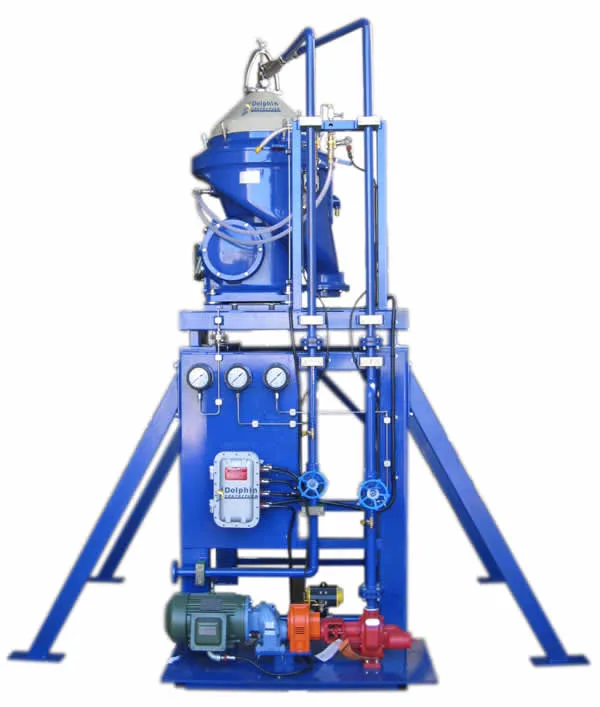
Alfa Laval Explosion Proof Centrifuge
Operation
An explosion-proof centrifuge separates liquids from solids safely in hazardous areas with explosion-prone liquids and gases. The stainless steel centrifuge separates edible fluids under corrosive conditions. The high centrifugal force (7,000 Gs) removes sediment as small as 1 micron from flammable fluids.
Need help selecting an explosion-proof centrifuge?
Our engineers can help you choose the right C1D2-rated system for your specific application.
Unique Features of Explosion-Proof Centrifuges
Direct Drive Transmission
Centrifuges typically have a friction clutch to reduce the torque during the initial startup. This clutch has friction liners that wear during daily use.
These liners can wear out to the point where the base metal plate can contact the steel drum and cause sparks. Such sparking is highly undesirable in the presence of flammable fluids or vapors.
The clutch is removed, and the drive motor is directly coupled to the centrifuge transmission in explosion-proof centrifuges. This design change eliminates the possibility of sparking and is known as a direct drive.
The direct-drive centrifuge requires high startup torque to ramp up the speed of the heavy bowl assembly. Therefore, an inverter or VFD (variable frequency drive) powers the centrifuge motor for direct-driven centrifuges.
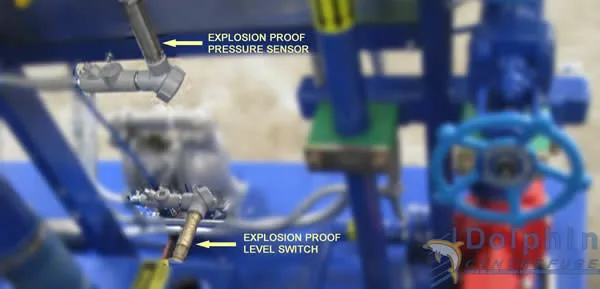
Explosion Proof Sensors - ADDAX Diesel Centrifuge
Nitrogen Blanketing
In addition to a direct-drive transmission, some centrifuges feature a nitrogen purge or the centrifuge's nitrogen blanketing. In this adaptation, we modify the centrifuge to introduce an inert (non-explosive) gas, such as nitrogen, into the centrifuge.
This inert gas purges out ambient air (containing oxygen) from within the centrifuge. The blanketing of the centrifuge with inert nitrogen eliminates the possibility of an explosion.
Special Sensors & Components
An explosion-proof centrifuge requires sensors and components such as electrically operated valves rated for areas classified as hazardous locations. These devices are available for different types of explosion-proof environments depending on the location's type and severity.
Related Technical Articles
Advantages
Explosion-proof centrifuges with stainless steel as construction material offer multiple advantages over conventional centrifuges. Some of the advantages are listed below.
Operate Under Hazardous Conditions
The most significant advantage of explosion-proof centrifuges is their applicability to hazardous areas. Conventional centrifuges do not have any of the safety features of explosion-proof centrifuges and are, therefore, a safety hazard in hazardous areas.
Suitable for Food-Grade Products
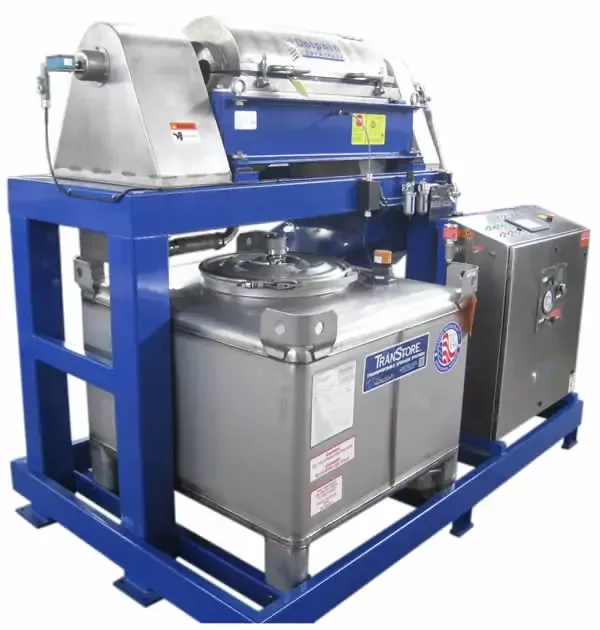
Stainless Steel (Food Grade) Decanter Centrifuge for Hazardous Areas Class 1 Div 2
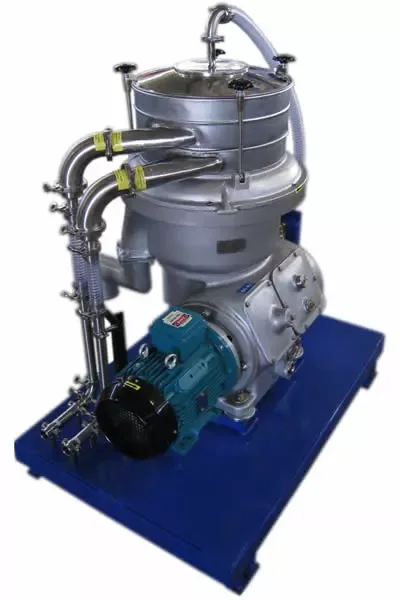
Alfa Laval Food Grade Stainless Steel 3-Phase Disc Centrifuge
Conventional centrifuges have non-ferrous and regular steel components that contact the process fluid. In cases where the centrifuge processes edible fluids and solids (food-grade), these metals can contaminate the process fluid.
A stainless steel centrifuge has all product contact parts made of stainless steel that eliminate product contamination.
Corrosive Fluid Processing
As mentioned above, standard centrifuges have internal components that are not corrosion-resistant. This construction is a disadvantage in the case of processing corrosive fluids.
A stainless steel centrifuge has all liquid contact parts made of stainless steel, which is corrosion-resistant. Therefore, the processing of corrosive products requires these types of centrifuges.
Specifications
The following table highlights the specifications of explosion-proof stainless steel centrifuges.
| Centrifuge Model | Alfa Laval Stainless Steel CBPX-213-XP |
| Type | Self-Cleaning; Disc-Stack |
| Material of Bowl Construction | 316 L Stainless Steel (Duplex) |
| Frame Material | Nodular Cast Iron |
| Bowl Speed | 4,400 RPM |
| RCF (Relative Centrifugal Force) | 6,800 Gs |
| Explosion Proof Classification | UL Class 1 Div 2 Groups C&D · IEC Zone 2 IIB T4 |
| Rated Capacity | 100 Gallons-Per-Minute |
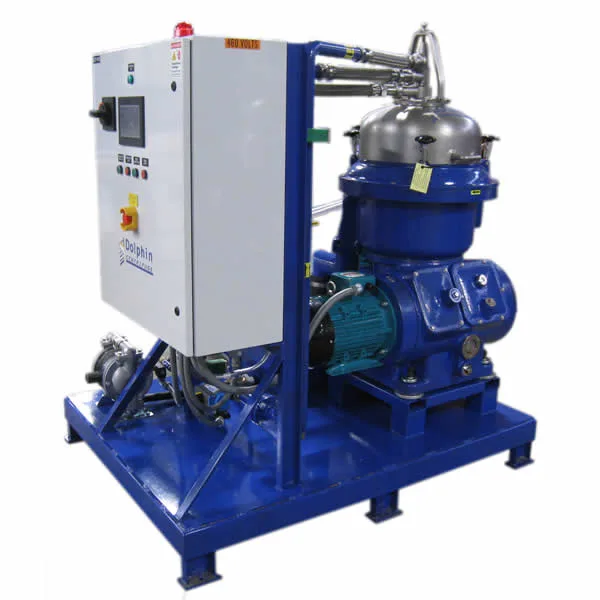
Alfa Laval Stainless Steel Centrifuge
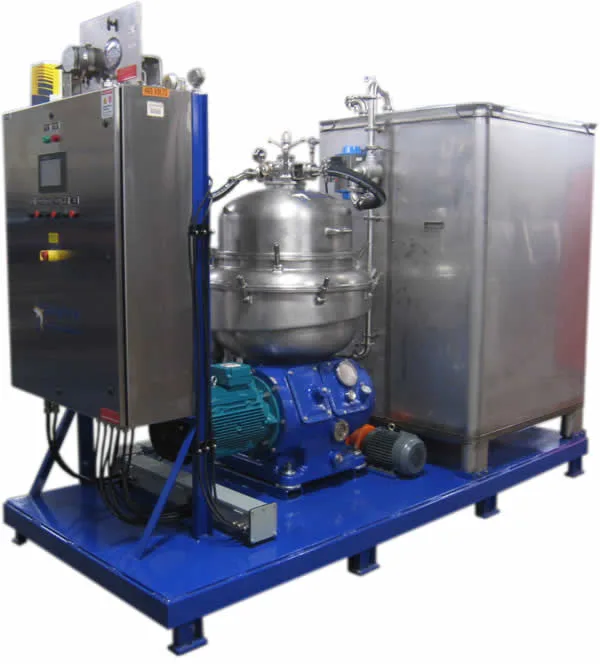
Test Your Process Fluid — Sample Analysis
Ship us a sample of your hazardous or corrosive process fluid and our engineers will assess centrifuge separation performance before you commit to a system.
Request Sample Testing →Explosion-Proof Stainless Steel Centrifuge FAQ
What makes a centrifuge explosion-proof?
Why does an explosion-proof centrifuge need stainless steel construction?
What is the explosion-proof classification of these centrifuges?
What is nitrogen blanketing in an explosion-proof centrifuge?
What capacity is available for explosion-proof stainless steel centrifuges?
Ready for an Explosion-Proof Stainless Steel Centrifuge?
Dolphin Centrifuge supplies UL Class 1 Div 2 and ATEX-certified stainless steel centrifuges for refineries, offshore platforms, and chemical processing. Warren, MI.