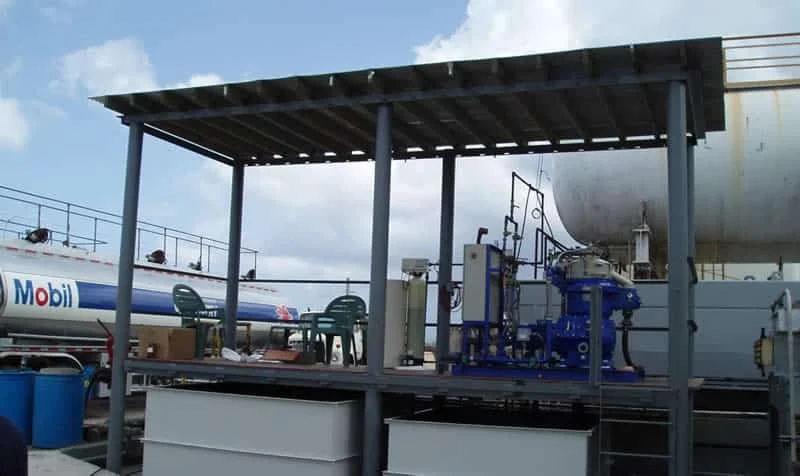
Dolphin Centrifuge supplied a DMPX-028 disc stack centrifuge (8,000 RPM, 20 GPM on waste oil) to a Guam facility processing 4.8 million gallons per year of marine and industrial waste oil — achieving 20% higher oil recovery and $380,000 annual savings versus heating and settling.
Introduction to Waste Oil Recovery in the Maritime Industry
Large ships generate significant amounts of waste oil through operations like contaminated fuel, bilge water management, and used engine lubrication. Efficiently recovering and processing this waste oil is essential for environmental compliance and cost management.
Traditional methods, such as heating and settling, are energy-intensive and inefficient. This case study examines how a waste oil processor in Guam improved its recovery process by implementing the DMPX-028, a disc stack centrifuge from Dolphin Centrifuge, capable of handling 4,800,000 gallons of waste oil annually.
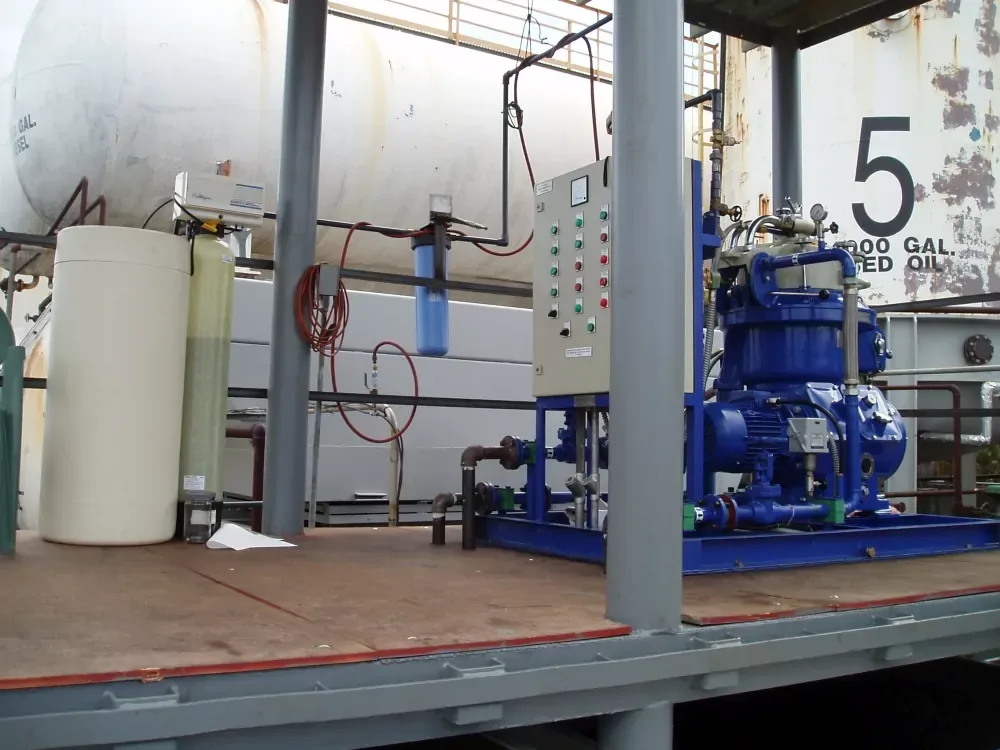
Waste Oil Centrifuge - Guam Installation
Challenges with Traditional Filtration Machines
High Energy Consumption
The facility's traditional filtration machine used heating waste oil to reduce its viscosity. This process consumed a significant amount of energy, increasing operational costs.
Inefficient Contaminant Removal
The heating and settling method was ineffective in removing fine particulates and water mixed with the oil, leading to lower purity levels in the recovered oil.
Frequent Maintenance and Downtime
Settling tanks required frequent maintenance to remove sludge, resulting in increased operational costs and downtime. Additionally, the centrifugal filter used in the traditional system was inefficient in handling the contaminants present.
Implementing the DMPX-028 Waste Oil Centrifuge Solution
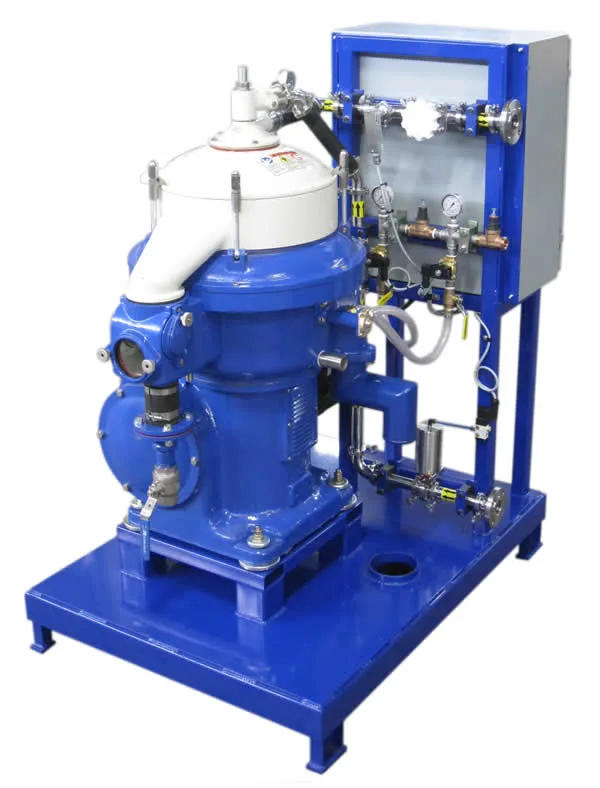
System Specifications
To find a more efficient solution, the facility partnered with Dolphin Centrifuge, an established manufacturer of waste oil centrifuges. Dolphin Centrifuge recommended installing the DMPX-028 disc stack, a self-cleaning centrifuge. This is a purpose-modified Alfa Laval centrifuge for high-efficiency waste oil processing.
Each DMPX-028 unit processes up to 20 gallons per minute (GPM) at 180°F. By deploying one unit operating continuously for 16 hours a day over 250 days a year, a total processing capacity of 4,800,000 gallons annually was achieved.
| DMPX-028 Self-Cleaning Disc Stack Centrifuge Specifications | |
|---|---|
| Capacity | 30 GPM light viscosity oils; 20 GPM on waste oil |
| Bowl Speed | 8,000 RPM |
| Drive Motor | 10 HP |
| Module Size/Weight | 5' × 6' × 6' (H); 3,200 Lbs |
| Services Needed | 480V 3-Phase Power, Potable Water, Compressed Air |
Installation and Operation
The centrifuge effectively separates waste oil from contaminants, including fine particulates, water, residual fuel, and emulsions known as the 'rag layer'. This separation increased the recovery rate by approximately 20%, enhancing both efficiency and profitability.
A pilot test confirmed that the DMPX-028 centrifuge achieved high-quality recovered oil, which is sold to re-refiners and used as heating fuel, improving the overall waste management process. The centrifuge serves as a reliable waste oil purifier, ensuring cleaner output. For similar used oil processing at scale, see our 6 MGY used oil processing plant case study.
How the Waste Oil Purifier Centrifuge Works
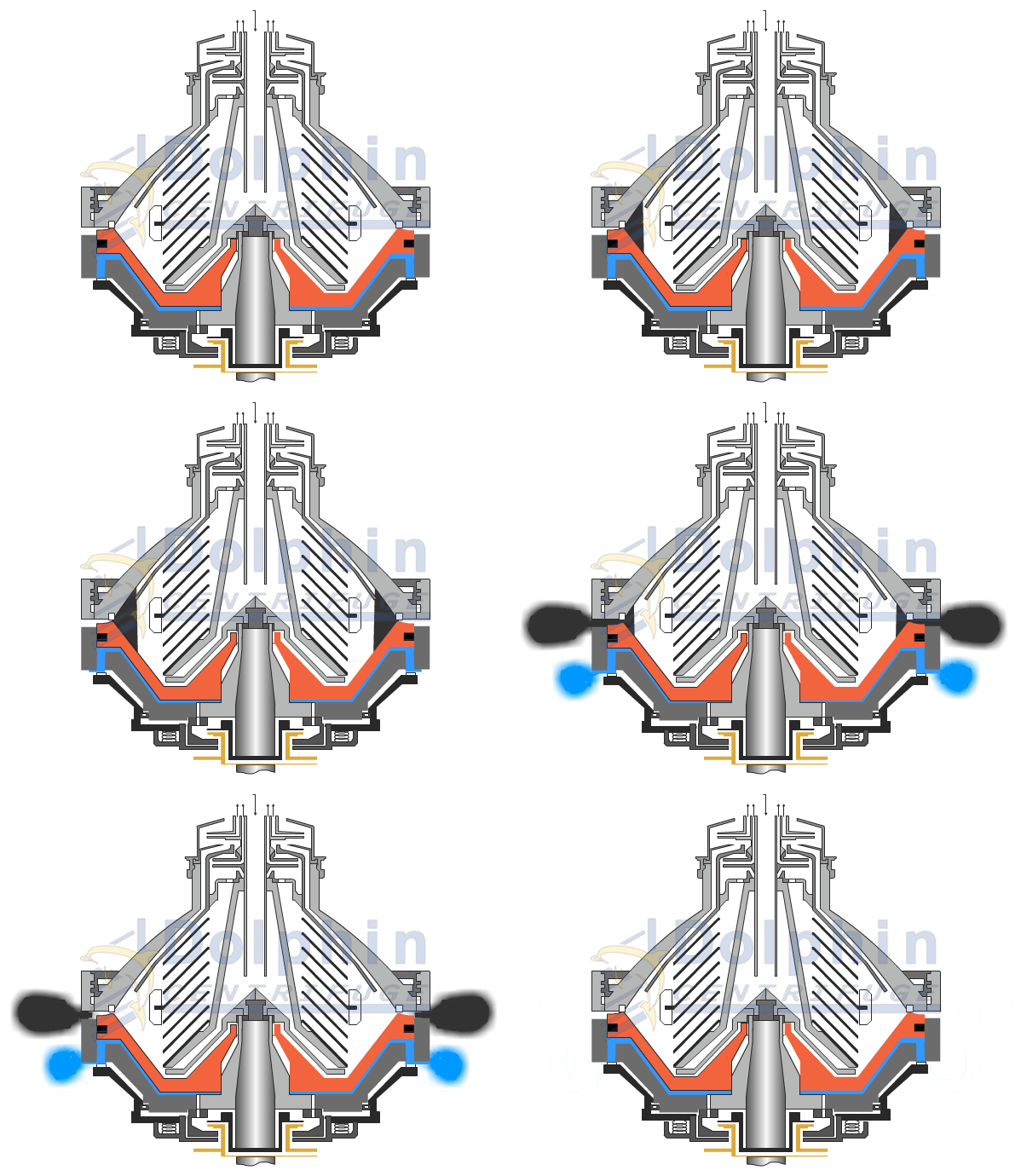
Disc Centrifuge Self-Cleaning Animation
Feed Inlet
Waste oil is introduced into the centrifuge through a central inlet tube or pipe.
Spinning Bowl
The centrifuge's bowl spins at high speeds, generating centrifugal forces up to 9,000 Gs. This force is essential for separating oil from lighter contaminants like water, residual fuel, and fine particulates.
Disc Stack
Inside the bowl, a series of conical discs are closely packed. These discs significantly increase the surface area available for separation. As the waste oil flows through the gaps between the discs, the centrifugal force drives denser contaminants outward while allowing the cleaner oil to remain closer to the center.
Separated Phases
Contaminants accumulate at the periphery of the bowl, forming a concentrated sludge that is automatically ejected without slowing down. Additionally, the centrifuge effectively separates the 'rag layer' or emulsions, further purifying the oil.
The purified oil flows towards the center and exits the centrifuge through an outlet for sale to re-refiners or use as heating fuel.
Self-Cleaning Mechanism
The centrifuge automatically ejects the separated sludge while maintaining its operating speed. This feature ensures continuous operation with minimal manual intervention. To see how disc stack centrifuge applications extend beyond waste oil, explore our full applications overview.
Benefits of Using an Oil Centrifuge for Waste Oil Recovery
Enhanced Separation Efficiency
The high centrifugal forces and increased surface area provided by the disc stack enable the centrifuge to remove even the smallest contaminants, resulting in higher-purity oil.
Effective Rag Layer Separation
The centrifuge's ability to separate or break emulsions or the 'rag layer' increases the overall recovery rate by approximately 20%, maximizing the amount of usable oil recovered from the waste stream.
Continuous Operation
Unlike the batch nature of heating and settling, the centrifuges operate continuously, allowing for a steady flow of recovered oil and reducing downtime.
Scalability
By deploying multiple DMPX-028 centrifuges, the facility can easily scale operations to handle increased volumes of waste oil, ensuring consistent performance without bottlenecks.
Cost Savings
The centrifuge system significantly lowers operational costs by reducing energy consumption associated with heating and minimizing the need for frequent maintenance of settling tanks. Additionally, the longevity of the centrifuges' components reduces replacement costs.
Labor Efficiency
The self-cleaning feature minimizes the need for manual sludge removal, freeing up labor resources for other critical tasks within the facility.
Space Efficiency
The centrifuges' compact design requires less floor space than multiple settling tanks, optimizing the facility's layout and allowing for increased processing capacity within the same area. Learn more about removing metals and ash from used oil with disc stack centrifuges.
Waste Oil Disc Stack Centrifuge Results
A comparison of waste oil before and after processing with the DMPX-028 centrifuge is presented below:
| Parameter | Before | After | Method | Unit |
|---|---|---|---|---|
| Sediment | 0.42 | 0.06 | ASTM D-473 | wt% |
| Water (by distillation) | 38 | 1.2 | ASTM D-95 | vol% |
| Vanadium | 28 | 31 | — | ppm |
| Aluminum | 495 | — | — | ppm |
| Silicon | 386 | — | — | ppm |
| Aluminum + Silicon | 881 | 222 | — | ppm |
| Ash Content | 1.17 | 0.09 | ASTM D-482-00a | wt% |
Analysis of Results
- Sediment Reduction: Decreased from 0.42 wt% to 0.06 wt%
- Water Removal: Reduced from 38 vol% to 1.2 vol%
- Metal Content: Combined Aluminum and Silicon decreased from 881 ppm to 222 ppm
- Ash Content: Reduced from 1.17 wt% to 0.09 wt%
- Enhanced Recovery: Increased recovery rate by approximately 20% due to effective rag layer separation
Cost-Benefit Analysis of Centrifuge vs. Traditional Methods
Heating and Settling System Costs
- Energy Costs: $0.06 per gallon
- Maintenance Costs: $250,000 annually
- Operational Downtime: $120,000 annually
- Total Annual Cost: $400,000
Centrifuge System Costs
- Electricity Costs: $0.015 per gallon
- Maintenance Costs: $5,000 annually
- Depreciation Cost: $5,000 annually
- Total Annual Cost: $20,000
Annual Savings
Switching to the centrifuge system saved approximately $380,000 each year. To validate performance before full commitment, Dolphin Centrifuge also offers industrial centrifuge sample testing on your actual waste oil stream.
Environmental Advantages of Centrifuge-Based Waste Oil Recovery
Reduced Energy Consumption
Lower energy use for heating decreased the carbon footprint.
Minimized Waste Generation
Efficient separation reduced the volume of contaminated waste requiring disposal.
Lower Chemical Usage
Mechanical separation reduced the need for chemical additives.
Conclusion: Transforming Waste Oil Recovery with Centrifuges
Installing the DMPX-028, a disc stack centrifuge from Dolphin Centrifuge, significantly improved the waste oil recovery process at the Guam-based facility.
The centrifuge enhanced oil purity, increased recovery rates by 20%, and reduced annual costs by $380,000. These improvements led to more efficient operations and substantial environmental benefits.
By adopting the DMPX-028 centrifuge, Dolphin Centrifuge enabled the waste oil processor in Guam to achieve greater sustainability, lower operational expenses, and optimized waste management. This implementation highlights the effectiveness of disc stack centrifuges in transforming waste oil recovery in the maritime industry.
Frequently Asked Questions
How much oil can a disc stack centrifuge recover from waste oil?
A properly sized disc stack centrifuge can recover 95–99% of usable oil from waste oil streams. In the Guam case study, the DMPX-028 disc stack centrifuge achieved 20% higher oil recovery versus the previous heating-and-settling method, adding $380,000 per year in recoverable oil value.
What types of waste oil can a disc stack centrifuge process?
Disc stack centrifuges process marine waste oil (bilge oil, slop oil, fuel sludge), industrial lubricating oil, transformer oil, cutting oil, and coolant oil. The centrifuge removes water, fine solids, and contaminants without the long residence time and heat losses associated with gravity separation.
What is the ROI for a waste oil centrifuge system?
ROI depends on waste oil volume and recovered oil value. The Guam facility with 4.8 million gallons per year capacity recovered $380,000 per year in additional oil value using a DMPX-028 centrifuge. Payback periods for disc stack waste oil recovery systems typically range from 12–36 months depending on throughput and oil pricing.
What is a rag layer and how does a centrifuge remove it?
A rag layer (also called an emulsion layer) is a stable emulsion of oil and water that resists gravity separation. A disc stack centrifuge generating 9,000+ Gs breaks through these emulsions by applying far greater force than gravity — separating the emulsion into clean oil and water phases, recovering up to 20% more usable oil compared to settling methods.
Can I test my waste oil before committing to a centrifuge system?
Yes. Dolphin Centrifuge offers a pilot testing program. Send us a sample of your waste oil and our engineering team will process it through our lab centrifuge, providing a detailed report including separation efficiency, water and sediment reduction, and centrifuge sizing recommendations. This eliminates guesswork and confirms ROI projections before capital commitment. Visit our sample testing page to learn more.
Ready to Recover More Value from Waste Oil?
Get a consultation and sample testing to confirm centrifuge performance on your waste oil stream.