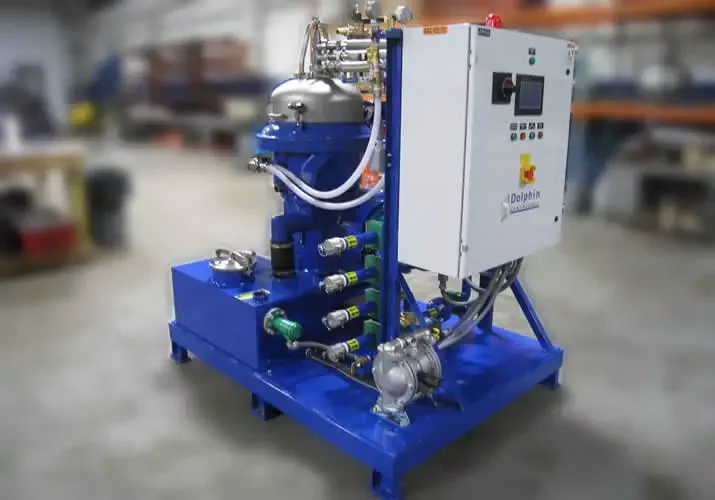
Dolphin Centrifuge supplies Alfa Laval industrial centrifuges — disc stack models generating up to 7,800 Gs and decanters at 3,150 Gs — for oil, fuel, coolant, wastewater, and chemical separation. Over 40 years of centrifuge experience from Warren, Michigan.
Summary: Alfa Laval industrial centrifuges are fluid separators designed and manufactured to separate fluids on a large scale. These centrifuges exert high centrifugal force to affect the separation of solids from liquids and liquids from liquids. Alfa Laval manufactures two primary types of industrial centrifuges — Decanter and Disc Stack — each suited to different separation tasks, feed concentrations, and throughput requirements. This article provides a comprehensive overview of both centrifuge types, their principles of operation, applications across ten major industries, the advantages and disadvantages of centrifugal separation, and detailed specifications for representative models in each category.
Types of Alfa Laval Industrial Centrifuges
Alfa Laval manufactures two types of industrial centrifuges. These are known as Decanter and Disc Stack centrifuges. The primary difference between these two centrifuges is the centrifugal forces exerted by each centrifuge on the process fluid.
The other main differentiating factor is the orientation of the centrifuges. In the following section, we delve into the features of each of these centrifuge types.
Decanter Centrifuges
An Alfa Laval decanter centrifuge is a horizontal centrifuge encompassing a rotating stainless steel cylinder with a concentric sludge auger in the center of the cylindrical bowl.
The auger or conveyor rotates with the bowl at a differential speed to the drum.
Operation
The inlet tube feeds the slurry into the rotating bowl of the decanter. The centrifugal force generated by the rotation causes the heavy sludge particles to move outward toward the bowl wall and accumulate against this wall. The lighter fluid displaces the heavier sludge and moves radially inwards towards the center of rotation of the bowl.
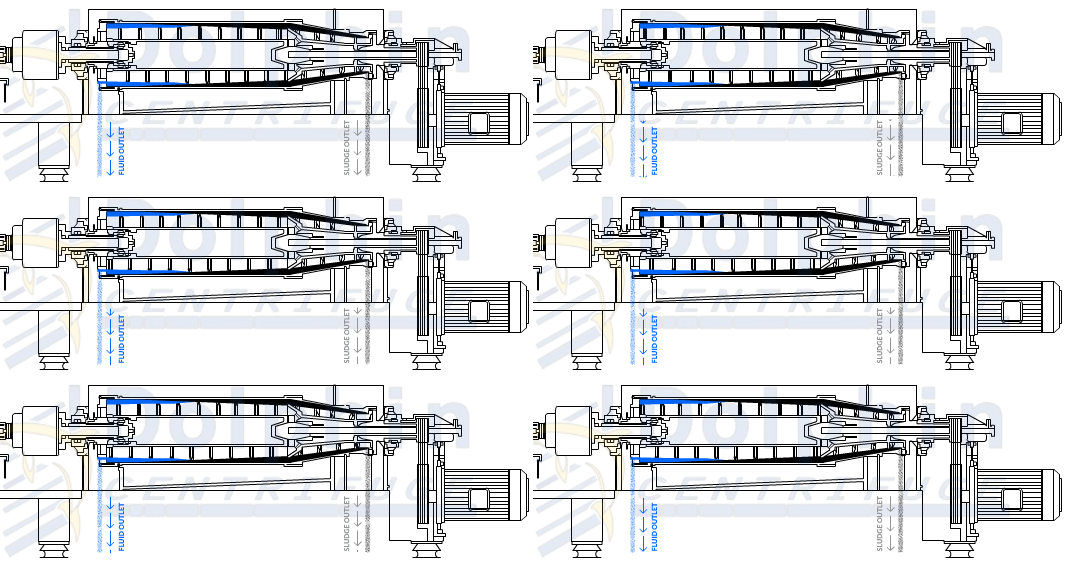
The auger pushes the sludge towards the solid's discharge ports on the far end of the rotating bowl. The centrifugal force causes the sludge to eject from the bowl through the ports.
The displaced fluid moves towards the opposite end of the bowl, towards the fluid discharge ports. The separated fluid flows over the weir dams and falls out of the bowl into the liquid receptacle.
Disc Stack Centrifuges
Alfa Laval disc-stack centrifuges are vertically oriented centrifuges that feature a rotating bowl with a set of discs known as a disc-stack. These centrifuges rotate faster than the decanter centrifuges and exert a higher gravitational force on the fluid.
This higher centrifugal force allows the disc stack centrifuges to separate smaller solid particles from the fluid and separate two immiscible fluids.
Operation
The feed tube introduces the process fluid into the centrifuge bowl from the top. The fluid passes through the inter-disc space, where the high centrifugal force acts on it. The g-force slings the heavy solids toward the outer bowl wall, and the lighter liquid moves toward the center of the bowl. It exits the bowl through a specially designed liquid chamber.
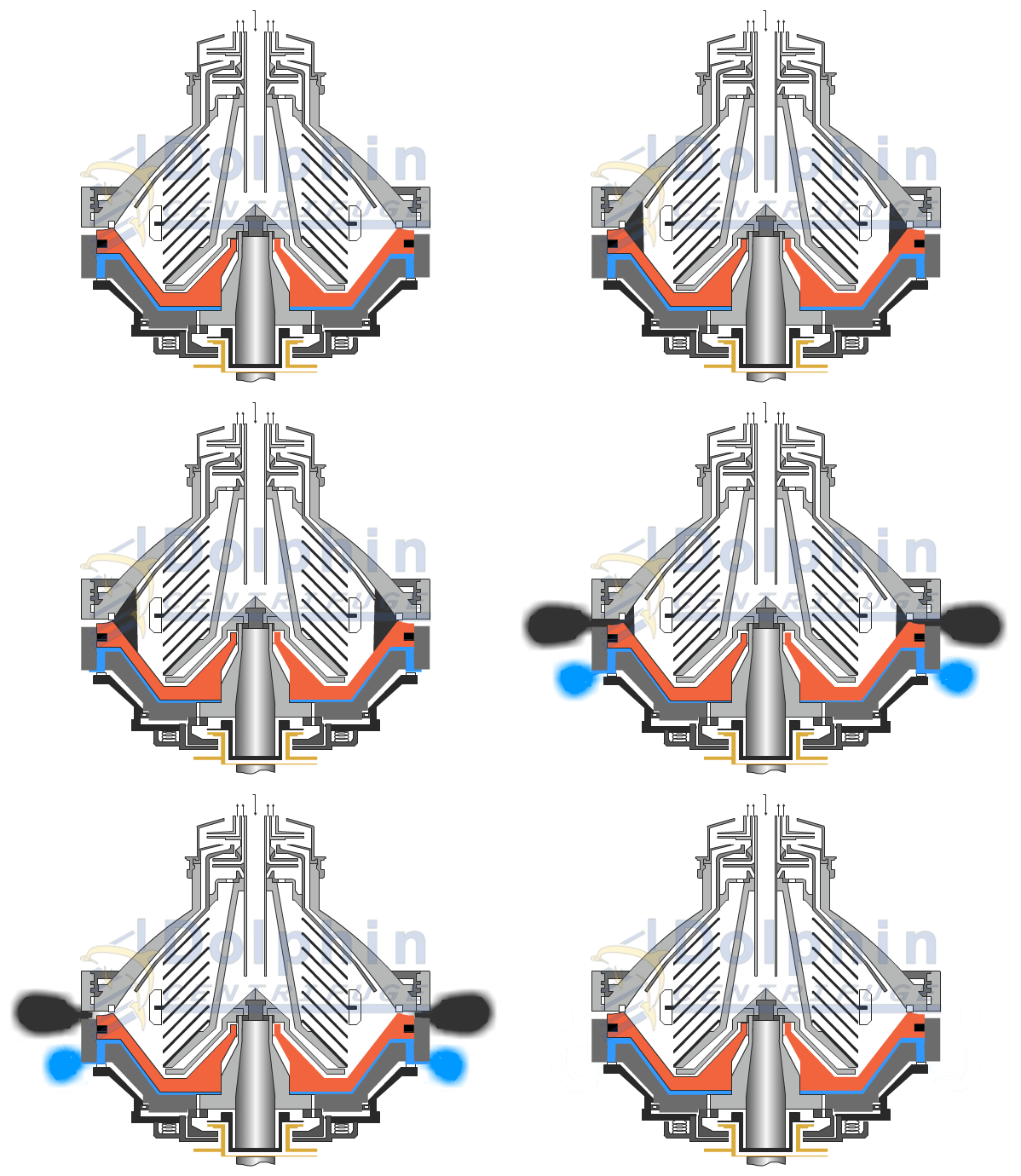
In the case of liquid-liquid separation, the heavier liquid accumulates on the outer bowl periphery and passes through the heavy phase discharge chamber to exit the bowl. The lighter liquid moves towards the bowl center and exits the bowl through the light phase chamber.
Need an Alfa Laval Centrifuge or Spare Parts?
Dolphin Centrifuge supplies remanufactured Alfa Laval disc stack and decanter centrifuges with full warranty. Parts for all models in stock.
Get a Quote →Frequently Asked Questions
The following are the most commonly asked questions about Alfa Laval industrial centrifuges.
What are the two main types of Alfa Laval industrial centrifuges?
Alfa Laval manufactures two types of industrial centrifuges: Decanter centrifuges (horizontal, ~3,150 Gs, suited for high-solids slurries) and Disc Stack centrifuges (vertical, up to 7,800 Gs, ideal for fine particle and liquid-liquid separation).
What industries use Alfa Laval industrial centrifuges?
Alfa Laval industrial centrifuges are used in food processing, beverage production, chemical manufacturing, pharmaceuticals, waste treatment, environmental recycling, manufacturing (coolant recovery), mining, power and utilities (turbine lube oil), and marine transportation (diesel and HFO purification).
What is the difference between a decanter and a disc stack centrifuge?
A decanter centrifuge is horizontally oriented with a scroll conveyor, generating ~3,150 Gs — ideal for high-solids sludge dewatering. A disc stack centrifuge is vertically oriented with a disc-stack bowl, generating up to 7,800 Gs — ideal for fine particle removal and liquid-liquid separation (oil/water).
What are the advantages of Alfa Laval centrifuges over filters?
Key advantages: compact footprint, higher separation efficiency (adjustable G-force), continuous operation without shutdowns, lower operating costs (no filter media), and long service life due to high-quality stainless steel construction.
What maintenance do Alfa Laval industrial centrifuges require?
Industrial centrifuges require periodic maintenance: bearing inspection and replacement, seal checks, bowl and disc cleaning, vibration monitoring, and lubrication. Dolphin Centrifuge provides full centrifuge repair and overhaul services for all Alfa Laval models.
Applications
Alfa Laval industrial centrifuges find many applications in process industries such as food, beverage, chemical, pharmaceutical, waste treatment, environmental recycling, manufacturing, etc. High-capacity fluid separation is an integral part of the process in such industries.
The following are some of the Alfa Laval centrifuge applications in some of these industries.
Food
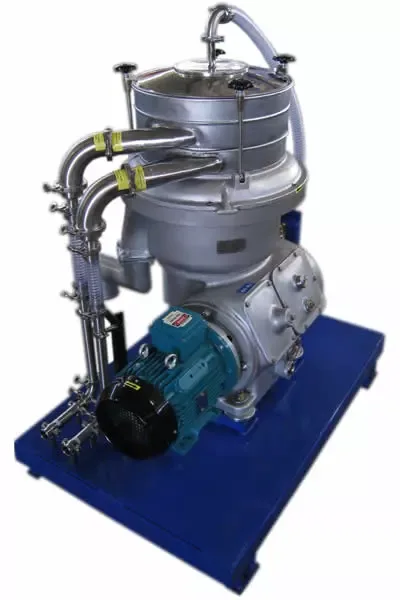
From the separation of cheese to soy protein, Alfa Laval centrifuges are a critical component of the food processing industry. Alfa Laval disc-stack centrifuges concentrate the milk proteins and separate them from the whey.
Alfa Laval decanter centrifuges separate the soy protein for tofu and milk-based cheese production, amongst other similar applications.
Beverage
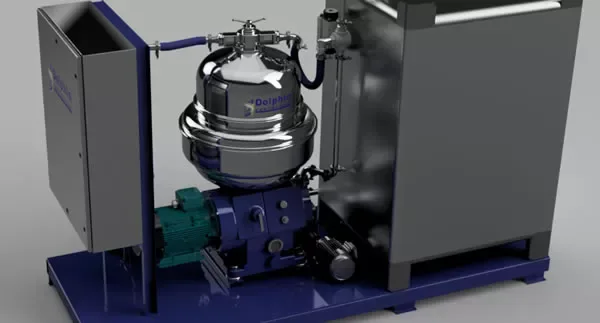
The standardization of milk (fat proportioning) is a common application for Alfa Laval disc-stack centrifuge. In fact, the old cream separators were the first version of commercial disc-stack centrifuges.
Beer, wine, cider, etc., are all clarified using disc-stack centrifuges on a commercial scale. Other organic beverages such as almond and oat milk also use Alfa Laval decanters and disc-stack centrifuges to clarify the milk from the organic mass.
Chemical
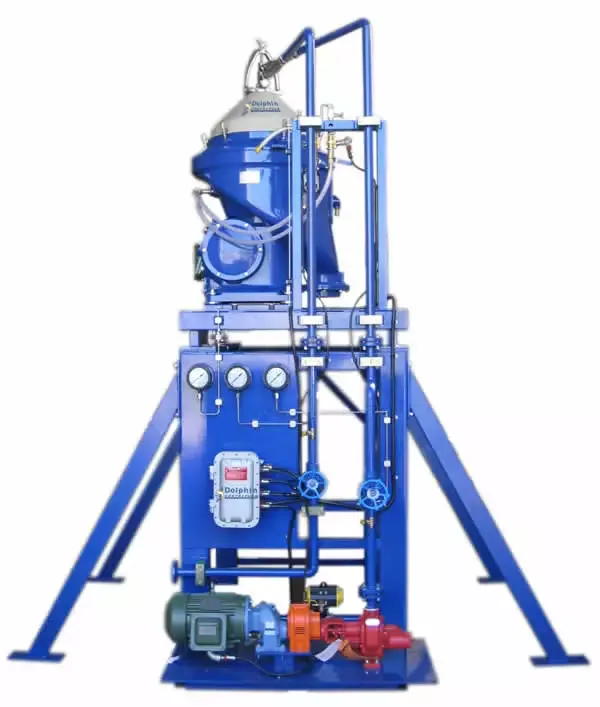
Industrial chemicals manufacturers use a variety of Alfa Laval industrial centrifuges for all kinds of separation applications. These centrifuges are standard in all chemical production plants, from separating centrate to clarifying fine sediment from process chemicals.
Depending on the type of chemicals, industrial centrifuges for chemical separation are often made of high-grade stainless steel to make them corrosion-resistant. Unique applications with oxidizing agents require inert gas blanketing of the centrifuge.
Pharmaceutical
Industrial centrifuges are crucial in separating biological cells from the centrate or broth from cell cultures to bacteria harvesting to vaccine production. The commercial manufacturing of raw pharmaceutical ingredients utilizes Alfa Laval centrifuges in various applications.
Waste Treatment
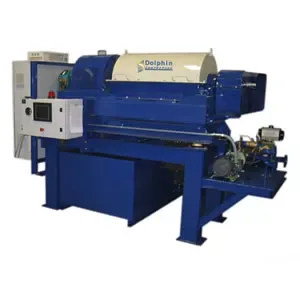
The large-scale treatment of sewage and municipal wastewater uses Alfa Laval industrial centrifuges. Decanter centrifuges are the backbone of waste treatment facilities worldwide. These centrifuges are efficient devices for separating organic waste sludge from water and reusing the wastewater.
Industrial waste streams cannot be discharged into the local drainage system without separating the sludge to a designated level before disposal. Industrial waste centrifuges efficiently separate the fluid from industrial slurries before disposal or remediation.
Environmental
Recycling used mineral oils from automobiles and other industrial applications is an important activity to reduce the environmental impact of these waste streams.
Alfa Laval centrifuges are efficient devices to separate large volumes of used oils from water and sediment, allowing the reuse of these fluids.
The conversion of used cooking oil into organic lubricants and biodiesel is another popular application for these centrifuges. Centrifuges play a crucial role in separating various impurities throughout the process of purification of UCO (used cooking oil) and its conversion into biodiesel through the esterification process.
Manufacturing
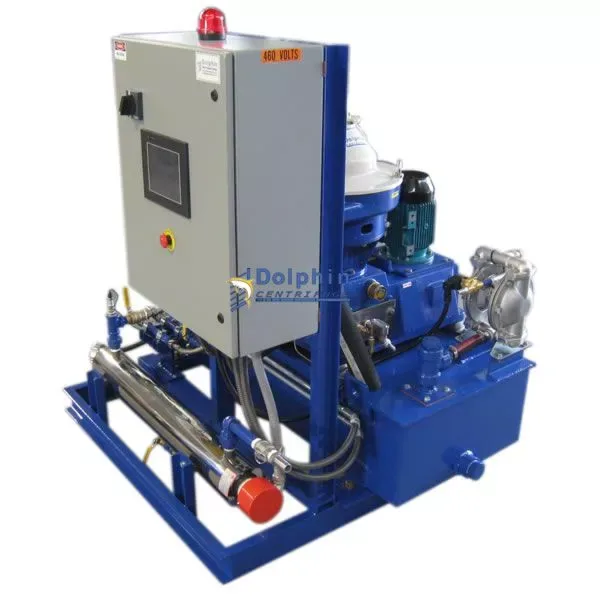
Manufacturing activities in industries use different types of fluids, from lubricants to metal-cutting coolants. These metalworking fluids are expensive, and the reuse of these fluids offers considerable cost savings to the manufacturers.
Alfa Laval disc-stack centrifuges are efficient at separating fluids from the accumulated contaminants. For example, a water-based machining coolant has tramp oil and metal fines as contaminants that can reduce the useful life of the coolant.
A three-phase disc stack centrifuge easily separates the coolant from tramp oil and metal fines continuously. It is possible to reuse the recovered coolant multiple times, reducing the replenishment cost and disposal fees.
Quench oil is another example of an industrial fluid ideal for recovering with a disc-stack centrifuge set up as a clarifier. The centrifuge removes fine rust and metal sludge to restore the properties of the quench oil that the user can then reuse multiple times.
Natural Resources
Mining is a global activity that extracts natural resources for all industrial and power applications. Mining equipment uses lubricants and coolants that are easy to recover with industrial decanters and disc-stack centrifuges.
Alfa Laval manufactures special centrifuges for hazardous mining applications with explosion-proof designs and motors.
Power & Utilities
Most power plants have steam turbines that generate electricity. These turbines use lube oil for bearing lubrication. Contamination of this lube oil leads to unscheduled maintenance and premature failure of the turbines.
An Alfa Laval lube oil centrifuge separates metal fines and moisture from the lube oil, ensuring the steam turbine's reliable operation.
Some cogeneration power plants use heavy fuel oil (HFO) as an energy source. The purification of HFO is crucial for the efficient operation of the generators. Fuel oil centrifuges manufactured by Alfa Laval ensure the supply of clean fuel oil consistently.
Transportation
Ocean-going vessels, tug boats, barges, etc., all use diesel for propulsion engines. The diesel storage tanks onboard the vessels accumulate sludge (rust) and water from condensation. The engines require clean diesel for reliable operation.
An Alfa Laval diesel centrifuge separates the water and sludge contaminants from diesel, continuously keeping the fuel clean for the engines.
Larger ocean-faring vessels use heavy fuel oil as fuel for engines. Again, Alfa Laval industrial centrifuges are well suited for separating water and sludge from HFO to ensure a clean fuel supply to the engines.
Advantages
Alfa Laval industrial centrifuges have several advantages over traditional separation technologies that involve media or gravity separation. Some of the advantages of these centrifuges are listed below.
Compact Size
Industrial centrifuges are relatively compact as compared to filters, settling tanks, and other separation equipment. For similar throughput capacity, an Alfa Laval centrifuge is a fraction of the size of filter or screw presses.
The smaller footprint allows the installation of these centrifuges in confined spaces.
Separation Efficiency
Industrial centrifuges exert a high centrifugal force on the fluid, which translates to high separation efficiency. Comparatively, filters and settling tanks have lower particle separation capacity and lower operating efficiency.

Also, the separation efficiency of industrial centrifuges made by Alfa Laval is adjustable during processing by adjusting the flow rate and other factors.
Continuous Processing
Alfa Laval industrial centrifuges feature a flow-through design that allows for the continuous separation of fluids without process interruptions for sludge cleaning. These centrifuges can process fluids for long periods, sometimes as long as months, without shutdown.
Other separation devices, such as presses (filter and screw), gravity settling tanks, etc., operate in a batch mode that requires the equipment to be shut down and cleaned periodically.
Operating Costs
Alfa Laval centrifuges are mechanical separation devices. They use the accelerated force of gravity to affect the separation of solids from liquids. Therefore, they do not use any media, such as filter media.
The absence of media implies that the labor associated with replacing the media is also unnecessary. Both these advantages make these centrifugal separation devices have considerably lower operating costs.
Equipment Durability and Longevity
Alfa Laval decanter and disc-type industrial centrifuges feature high-quality material construction and heavy-duty design. This robust construction enables these centrifuges to have a long service life and durable performance.
Disadvantages
Certain limitations can impede the implementation of Alfa Laval centrifuges for all conceivable applications. The following are some of the disadvantages of industrial centrifuges.
Equipment Cost
Industrial centrifuges are slightly more capital-intensive as compared to other separation equipment. Depending on the processing capacity, the initial cost of an Alfa Laval centrifuge can be twice that of filter presses.
The continuous processing ability and low operating cost compensate for the higher initial cost in a short time.
Maintenance
All industrial separation equipment needs some sort of maintenance. However, industrial centrifuges have bowls that rotate at high speeds and require special bearings. Therefore, periodic maintenance of these centrifuges is required to ensure reliable operation and minimize breakdowns.
Some consider the cost and time of maintenance as a disadvantage though the frequency and downtime of maintenance are not that significant.
Utilities
Alfa Laval disc-stack centrifuges require water and compressed air in addition to power. These additional utility requirements can detriment the application of these centrifuges at remote locations where clean water is unavailable.
Skilled Operators
Centrifuges are more sophisticated mechanical devices than presses or filters. Therefore, these machines are best operated by skilled operators who are familiar with the inner workings of centrifuges. On the other hand, filters and presses are operable by semi-skilled or unskilled labor.
Specifications
The following tables list some of the crucial specifications of industrial centrifuges manufactured by Alfa Laval.
Decanter Centrifuge
| Specification | Alfa Laval FPNX-414 | Alfa Laval UVNX-418 |
|---|---|---|
| Bowl Speed | 4,000 RPM | 4,000 RPM |
| G-Force | 3,150 Gs | 3,150 Gs |
| Max. Processing Capacity | 60 GPM | 120 GPM |
| Motor Power | 15 HP | 25 HP |
| Specific Application | Fish Oil Separation | Olive Oil Separation |
| Gearbox Type | Planetary | Planetary |
| Gearbox Ratio | 125:1 | 125:1 |
| Weight | 2,000 lbs | 4,500 lbs |
| Dimensions | 3' × 7' × 5' (H) | 3' × 12' × 5' (H) |
| Fluid Wetted Parts Material | 316 L Stainless Steel | 316 L Stainless Steel |
Disc Stack Centrifuge
| Specification | Alfa Laval MAB-103 | Alfa Laval WHPX-513 |
|---|---|---|
| Bowl Speed | 8,100 RPM | 4,140 RPM |
| G-Force | 7,800 Gs | 6,950 Gs |
| Max. Processing Capacity | 2 GPM | 100 GPM |
| Motor Power | 1 HP | 15 HP |
| Specific Application | Diesel Fuel Separation | Used Oil Separation |
| Fluid Discharge | Gravity (Oil & Water) | Pumped (Oil & Water) |
| Sludge Discharge | Manual Clean | Self-Ejected |
| Weight | 220 lbs | 2,500 lbs |
| Dimensions | 2' × 3' × 2' (H) | 4' × 5' × 6' (H) |
| Fluid Wetted Parts Material | 316 L Stainless Steel & Bronze | 316 L Stainless Steel & Bronze |
How to Select the Right Industrial Centrifuge
Centrifuge selection depends on five primary process parameters. Answering these questions enables Dolphin's engineers to recommend the optimal machine and configuration for your specific application.
- 1 What phases are present? Liquid–liquid (oil + water), liquid–solid (one liquid phase with solids), or three-phase (oil + water + solids)? This determines purifier vs clarifier vs three-phase separator.
- 2 What is the solids concentration? Below 5% by volume favors a disc stack; above 10% requires a decanter. The transition zone (5–10%) requires evaluation of both options.
- 3 What is the required flow rate? Disc stack models range from 1 GPM to 70+ GPM. Decanters can handle much higher solids volumes at lower liquid flow rates.
- 4 What are the fluid properties? Viscosity, density differential between phases, and operating temperature all affect centrifuge sizing and may require pre-heating.
- 5 What is the operating environment? Hazardous area (ATEX/explosion-proof), food-grade (3-A sanitary), marine (Lloyd's Register, DNV), or standard industrial?
For a structured selection process, see our Industrial Centrifuge Selection Guide. For complex applications, Dolphin offers paid sample testing at our Warren, Michigan facility — ship us a sample of your fluid and we will run it through multiple centrifuge configurations to determine the optimal centrifuge type and settings for your application.
Ready to discuss your application? Call (248) 522-2573 or email sales@dolphincentrifuge.com.
Related Articles
Industrial Centrifuges
Complete guide to industrial centrifuge types, applications, and selection criteria.
Disc Stack Centrifuges
How disc stack centrifuges work, their applications, and specifications.
Decanter Centrifuges
Decanter centrifuge operation, types, and industrial dewatering applications.
Alfa Laval Centrifuges
Overview of the complete Alfa Laval centrifuge product line stocked by Dolphin Centrifuge.
Industrial Centrifuges FAQ
Frequently asked questions about industrial centrifuge selection, operation, and maintenance.
Centrifuge Selection Guide
Step-by-step guide to selecting the right Alfa Laval centrifuge for your application.
By Sanjay Prabhu MSME, Centrifuge Applications Engineer, Dolphin Centrifuge
Ready to Source Alfa Laval Centrifuge Parts or a Remanufactured Unit?
Call Dolphin Centrifuge at (248) 522-2573 or request a quote online.