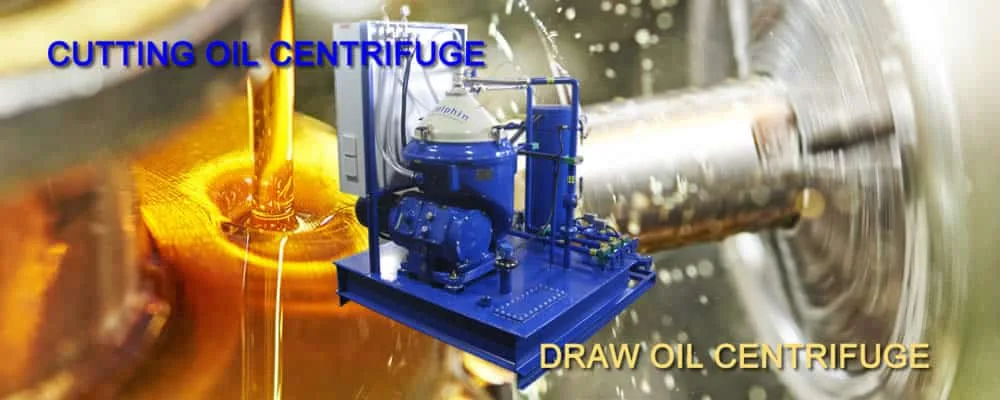
Dolphin Centrifuge supplies disc stack centrifuge systems for cutting oil purification, removing metal fines down to 0.5 microns from cutting, draw, and rolling oils at 7,000 Gs. Self-cleaning separators process 12–25 GPM continuously without consumable filter media.
What is Cutting Oil?
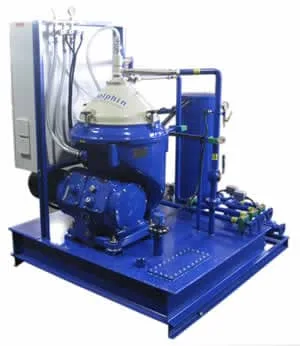
Machining metal generates heat, which damages the cutting tool and the machined part. Cutting oil, also known as cutting fluid, dissipates the heat generated during machining. The oil also reduces the friction between the cutting tool and the machined surface, extending tool life.
Cutting oil is widely used in turning, milling, saw-cutting, gear hobbing, and other machining processes. Dolphin Centrifuge, based in Warren, Michigan, supplies purpose-built disc stack centrifuge systems for cutting oil purification at 7,000 Gs with separation down to 0.5 microns.
Dolphin Centrifuge supplies turnkey cutting oil purification systems for machining, drawing, and rolling operations — removing metal particles as fine as 0.5 microns without consumable filter media.
Need to Recycle Cutting Oil
Oils are expensive to buy and sometimes even more expensive to dispose of. Environmental regulations are becoming demanding, with laws banning the “wear-out and throw-away” approach.
In other words, companies today must keep their oils in service for as long as possible. With an industrial centrifuge, they can — sometimes indefinitely!
Fine metal particles contaminate cutting oil during the machining process. These particles can cause an imperfect surface finish of machined parts and reduced tool life. It is essential to remove these particles to reuse the oil.
An industrial centrifuge specially modified to recover used cutting oil is known as a cutting oil centrifuge. It separates metal sediment contaminants and water (if any) from industrial cutting oil.
Centrifuge Operation on Cutting Oil
A disc stack centrifuge processes cutting oil by generating centrifugal forces up to 7,000 Gs — thousands of times the force of gravity. At this force level, metal particles as small as 0.5 microns are driven outward to the bowl wall and captured, while clean oil flows inward through the disc stack and exits the centrifuge.
The centrifuge bowl contains a stack of closely spaced conical discs that divide the oil flow into thin layers. This reduces the distance a contaminant particle must travel to reach a collection surface, enabling the capture of extremely fine metal fines that would pass through conventional filters.
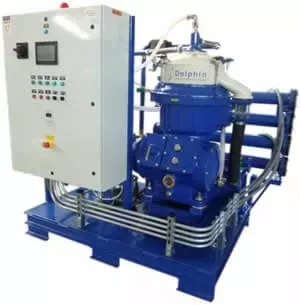
The centrifuge self-ejects the separated particles periodically. Clean cutting fluid recovered by the centrifuge is reusable, thus saving replacement oil and disposal costs.
In self-ejecting (self-cleaning) models, accumulated sludge is automatically discharged from the bowl at timed intervals through peripheral ports. The bowl opens momentarily, ejects the collected metal fines and contaminants, then closes and resumes separation — all without stopping the centrifuge or interrupting the process.
The centrifuge typically operates in a kidney loop arrangement, continuously drawing contaminated oil from the machine sump or central reservoir, cleaning it, and returning purified oil. This maintains consistent oil quality around the clock without operator intervention.
Benefits of Centrifuge Cutting Oil Purification
Centrifuges offer several benefits for industrial fluids. Some of them are listed below.
- Reduced purchasing and disposal costs for oils
- Reduction in cutting tool replacement cost
- Reduced downtime of auxiliary equipment such as pumps
- Consistent machined parts quality
- Filtration-related media and labor cost reduction
- Automatic operation — PLC-controlled systems run unattended with automatic sludge ejection
Need a Cutting Oil Purification System?
Our engineers will evaluate your oil type, viscosity, and sump volume to recommend the optimal centrifuge system.
Draw Oil Centrifuge Applications
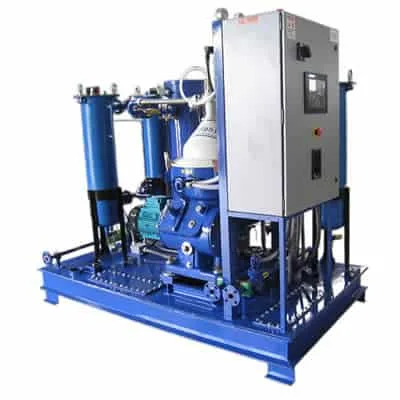
Draw oil reduces the friction between metal-forming dies and the formed metal. It is a high-viscosity oil that sticks to the drawn metal and drawing die surface, providing essential lubrication during the stretching process. Sheet metal parts, metal extrusion, wire drawing, etc., all use drawing lubricants.
The severe friction between the die and drawn metal causes wear on the forming raw metal surface. These wear particles contaminate the drawing oil reducing its useful lifespan.
Traditionally filtration is the way to remove these fine particles from drawing oil. However, considering filters' media and labor costs, the industrial centrifuge is often the most cost-effective option.
Draw Oil Centrifuge Operation
A draw oil centrifuge is a high-speed disc centrifuge that separates small wear metal particles from the drawing oil. An industrial centrifuge generating over 7,000 g-force removes all fine metal particles down to 1/2 micron level consistently from draw oil.
The higher viscosity of drawing oil reduces the throughput capacity of the centrifuge. Increasing the drawing oil temperature through a heater reduces the viscosity, increasing the centrifuge efficiency and throughput.
Aluminum wire drawing is a typical application where large amounts of very fine aluminum powder contaminate the drawing oil. A self-cleaning centrifuge produces high enough centrifugal force to clean the drawing oil to a reusable level effectively.
Multiple aluminum wire drawing companies are using Dolphin Centrifuge-manufactured draw oil centrifuge systems. Contact us for capacity and performance details.
Rolling Oil Centrifuge Applications
Forming plates and sheets of metal by squeezing large billets between two rollers is known as rolling. Rolling is a standard process in manufacturing sheets from steel, aluminum, copper, and other metals.
Rolling oil is a lubricant used to reduce the friction between the rollers and the rolled metal. The lubrication facilitates smooth processing and the desired surface finish of the sheets produced.
The hot rolling process causes scaling on the surface of the feedstock that contaminates the rolling oil. It is imperative to separate these solid particles from the oil for their reuse.
Again, filters are used to remove these slag or scale particles from rolling oil. The cost of filtration media and related labor adds up over time. Mechanical separation with an industrial centrifuge is worth considering, especially in high rolling oil volumes.
Cold rolling of steel and copper alloys uses oil emulsion. This emulsion is a specific blend of water-soluble rolling oil with water. Rolling oil emulsions get contaminated with fine metal debris and oil from the rolled metal.
Separating water-based emulsions from undesirable oil and particles is the perfect application for our machine coolant centrifuges.
Rolling Oil Centrifuge
A high-speed, disc-stack centrifuge is ideal for recovering rolling oil by separating metal particles from the oil.
Given the higher proportion of solids, a ‘self-cleaning’ type centrifuge can remove all solids down to a half-micron level from the rolling oil. They are thus extending the useful life of the oil multiple times, saving replacement and disposal costs.
Materials of Construction
The cutting oil centrifuge is designed for mineral oil and fuel separation applications. Therefore, the material used in its construction is well suited for such uses. The following table lists the various components of the centrifuge and the material it is made of.
| Component | Material |
|---|---|
| Bowl Body & Bowl Hood | 316L Duplex Stainless Steel |
| Disc Stack | 316L Duplex Stainless Steel |
| Distributor (Disc Carrier) | Marine Grade Bronze or 316 Stainless Steel (Special Order) |
| Top Disc | Marine Grade Bronze or 316 Stainless Steel (Special Order) |
| Top Covers (Collecting) | Silium (Aluminum Alloy) |
| Frame | Nodular Cast Iron |
Specifications
The following table compares specifications for our most common cutting oil centrifuge models. Both are self-cleaning disc stack centrifuges with automatic sludge ejection.
| Specification | DMPX-014 | DMPX-042 |
|---|---|---|
| Typical Application | Copper Broaching Oil | Aluminum Machining Oil |
| Oil Viscosity | 40 cSt @ 50°C | 14 cSt @ 50°C |
| Separation Efficiency | 0.5μ metal particles | 0.5μ metal particles |
| Max Throughput | 12 GPM | 25 GPM |
| Bowl Sludge Space | 0.6 Gal | 1.5 Gal |
| Oil Cleanliness | 0.01% Solids in Clean Oil @ 5 GPM | 0.01% Solids in Clean Oil @ 10 GPM |
| Oil Cleanliness | 0.025% Solids in Clean Oil @ 10 GPM | 0.025% Solids in Clean Oil @ 20 GPM |
| Drive Motor | 4 HP | 10 HP |
| System Features | VFD Feed Pump, 5 Micron Polishing Filter, Sludge Tank & Pump | Clean Oil Tank w/ VFD Pump, Sludge Tank & Pump, 60 kW Electric Pre-Heater |
Note: Actual throughput depends on oil viscosity and process temperature. Higher temperatures reduce viscosity and allow higher flow rates. Contact us for sizing on your specific cutting oil.
Related resources: Machine Coolant Centrifuges | Oil Centrifuges | Centrifuge FAQ (101 Questions) | Self-Cleaning Centrifuge | Sample Testing Program | How to Pick the Right Centrifuge