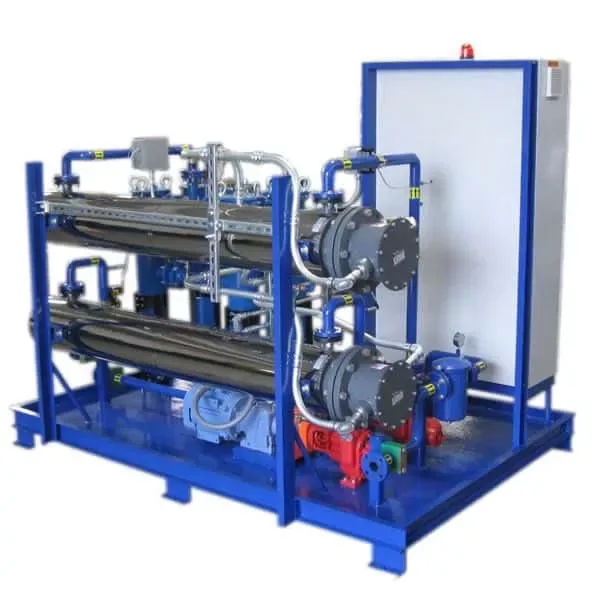
Dolphin Centrifuge designs and supplies fluid pre-heating systems as integrated components of centrifuge module systems — including electric immersion heaters (3–60 kW), steam heat exchangers (shell-and-tube and plate), and hot water recirculating systems. Pre-heating viscous oils to 60–95°C is critical for achieving rated centrifuge separation capacity on heavy fuel oil, waste lube oil, transformer oil, and waste cooking oil.
Why Viscous Oils Require Heating
Centrifugal separation depends on the density difference between phases and the viscosity of the continuous liquid. High-viscosity oils — such as heavy fuel oil (HFO), used lube oil, transformer oil, and waste cooking oil — flow poorly at ambient temperature and resist the centrifugal forces needed for clean separation. Without pre-heating, these fluids can stall separation efficiency, reduce throughput, and shorten bearing life due to sluggish flow through the centrifuge inlet.
Raising feed temperature to 60–95°C (140–200°F), depending on oil type, reduces viscosity dramatically and allows the centrifuge to operate at its rated capacity. For a waste oil centrifuge system or a custom-engineered centrifuge skid, the heating system is often as critical to performance as the centrifuge itself.
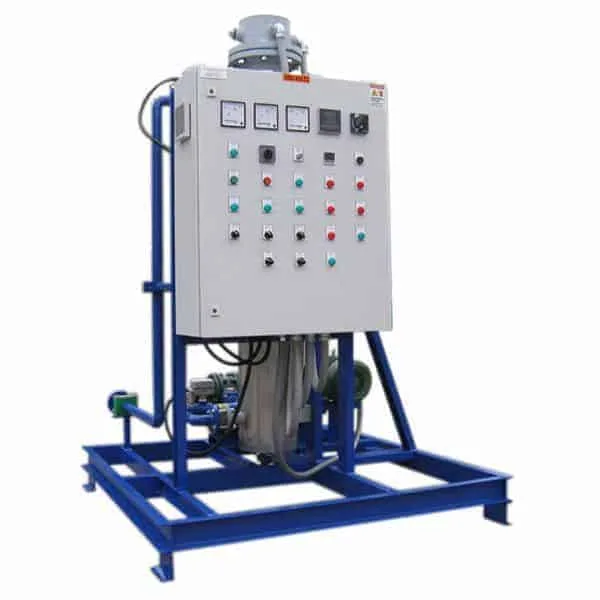
Heater Types Dolphin Supplies
Electric Immersion Heaters
Flanged or threaded electric immersion elements installed directly in the feed tank or inline heater vessel. Simple installation, precise temperature control via PID controller, no utilities required beyond electrical supply. Typical ratings: 3–60 kW.
Best for: Small to mid-size systems where steam is unavailable.
Steam Heat Exchangers
Shell-and-tube or plate heat exchangers using facility steam as the heating medium. High duty output and fast response. Steam supply typically 15–150 PSI depending on target oil temperature.
Best for: High-flow systems in facilities with existing steam infrastructure.
Gas-Fired Heaters
Direct-fired or indirect (thermal fluid) heaters for remote or off-grid locations. Natural gas or propane. Suitable for high-volume HFO and waste oil pre-treatment where electrical capacity is limited.
Best for: Marine, remote industrial, or high-volume waste oil facilities.
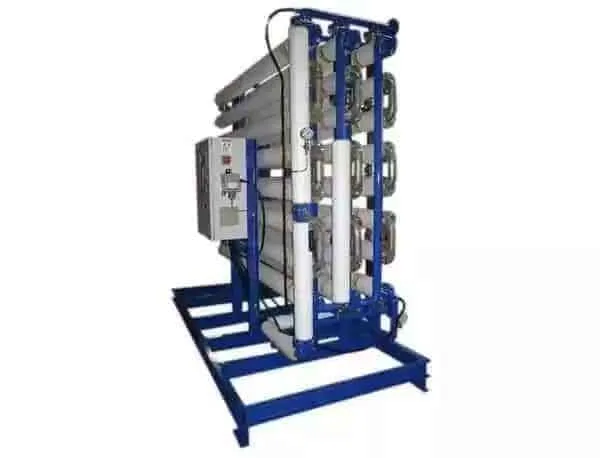
Typical Temperature Ranges by Application
| Fluid Type | Recommended Feed Temp | Notes |
|---|---|---|
| Used Lube Oil | 70–85°C (158–185°F) | Reduces viscosity; improves water and soot separation |
| Heavy Fuel Oil (HFO) | 85–95°C (185–203°F) | High viscosity requires aggressive heating |
| Waste Cooking Oil (WVO) | 60–75°C (140–167°F) | Lower target; avoid oxidation at excessive temps |
| Transformer Oil | 50–70°C (122–158°F) | Gentle heating preferred to preserve dielectric |
| Diesel / Light Fuel Oil | Ambient or 30–40°C | Low viscosity — minimal heating typically required |
Not sure which heater type fits your process?
Send us a fluid sample and our engineers will recommend the right heating configuration for your centrifuge system.
Skid Integration
Dolphin Centrifuge designs and fabricates heating systems as integrated components of turnkey centrifuge skids. The heater, feed pump, temperature controls, and centrifuge are mounted on a common structural base and wired to a single control panel — simplifying installation, startup, and operator training.
For retrofit projects, heating systems can also be supplied as standalone pre-heater packages that tie into an existing centrifuge installation. Our engineers size the heater duty based on feed flow rate, ambient temperature, target process temperature, and heat loss through insulated piping.
Heater Sizing Guidance
Key inputs for heater sizing:
- Flow rate (GPM or LPH) at the centrifuge inlet
- Fluid type and inlet temperature (typically ambient or from storage tank)
- Target process temperature at centrifuge inlet
- Available utilities: electrical capacity, steam pressure, or gas supply
- Heat-up time requirement (batch vs. continuous flow)
Dolphin engineers will calculate required kW or BTU/hr and recommend an appropriately sized heater. Contact us with your flow rate and fluid type to get a sizing recommendation.
Ready to Get Started?
Dolphin Centrifuge engineers will size the right fluid heating system for your centrifuge installation. Tell us your flow rate, fluid type, and target temperature for a custom recommendation.