Dolphin Centrifuge tests customer samples before recommending equipment. Every test shown here was run on Dolphin's Alfa Laval lab-scale disc stack centrifuge, a manual-clean flow-through machine that develops the same G-force as the production centrifuges it stands in for. These anonymized examples show how pilot-scale centrifuge testing helps identify whether a disc-stack centrifuge, decanter centrifuge, or two-stage system is the right fit. The examples below are summarized from real sample tests while keeping customer details private.
Testing is run and interpreted by Sanjay Prabhu, MSME, at Dolphin Centrifuge, backed by the company's 40+ years with Alfa Laval disc stack and decanter centrifuges. Dolphin Centrifuge is the independent specialist in Alfa Laval centrifuges: remanufactured machines, turnkey systems, parts, and service. Dolphin is an independent remanufacturer and is not affiliated with Alfa Laval.
Why Sample Testing Matters
Centrifuge separation depends on the actual fluid, not just the industry name. Solids percentage, particle size, viscosity, temperature, oil-water balance, emulsions, and pre-treatment all affect the result. A small sample test helps answer three practical questions: can the separation be done, what type of centrifuge is appropriate, and what limitations need to be handled before a production system is selected.
Confirms Feasibility
Confirms if centrifugation works for the specific fluid.
Shows Visual Result
Shows what separates visually before any equipment purchase.
Guides Selection
Guides equipment selection based on observed separation behavior.
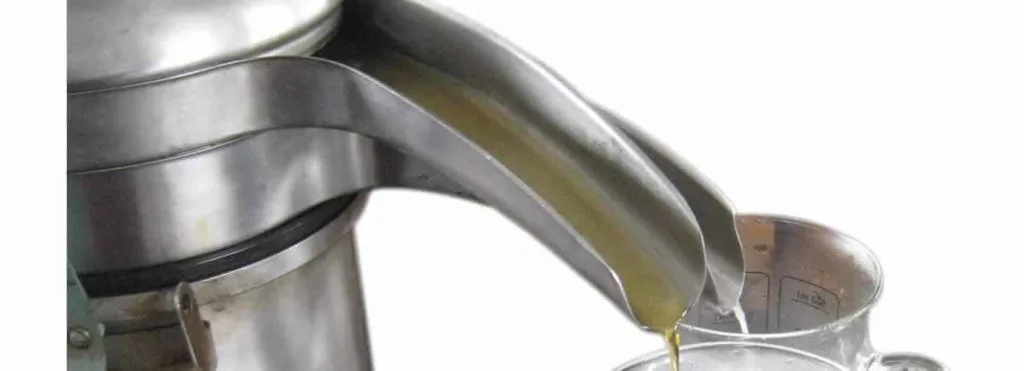
Sample Testing Result Examples
Each example below is drawn from a real sample test. Customer names and proprietary fluid details are not published. Results apply to the specific sample tested and are not a guarantee for different fluids.
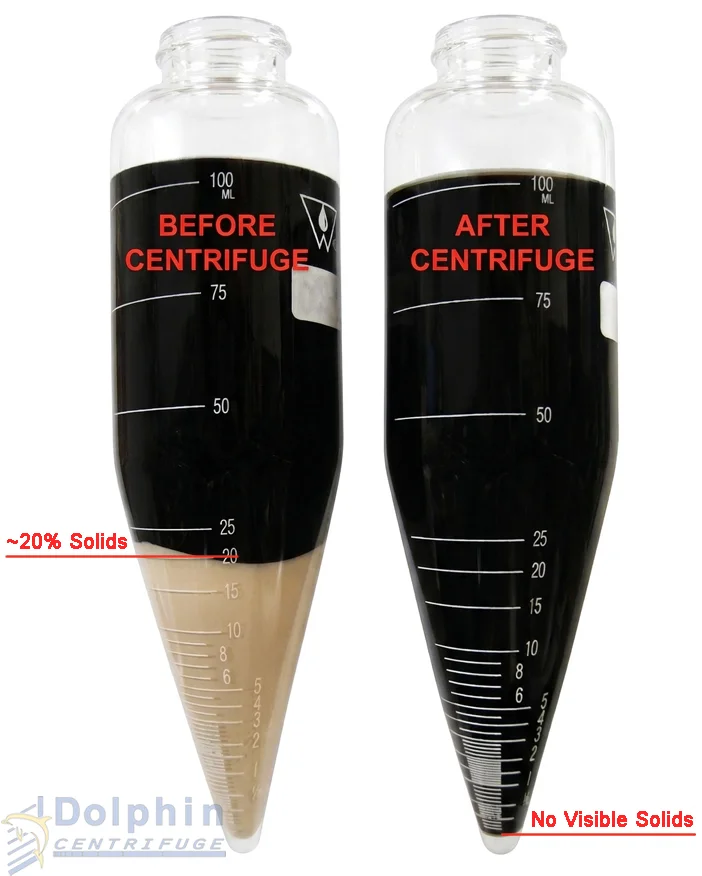
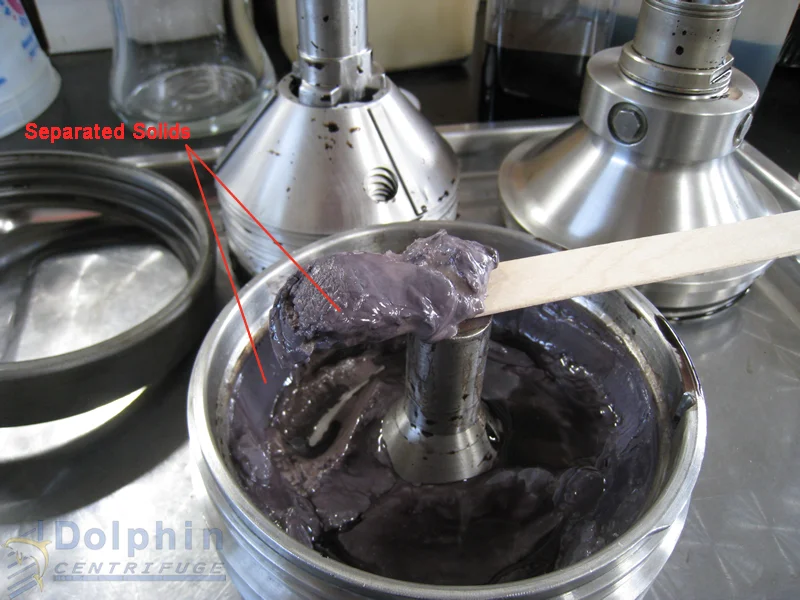
Chemical Slurry with High Solids
| Goal | Remove fine suspended solids from a dense process liquid. |
| Test finding | The pilot disc-stack test clarified the liquid and removed visible solids from the post-test sample. |
| Limitation | The incoming sample had about 20% solids by volume, which is too high for a disc-stack centrifuge alone in production. |
| Recommendation | Use a decanter centrifuge first to remove bulk solids, then use a self-cleaning disc-stack centrifuge for final polishing. |
Takeaway: Testing showed the separation was possible, but also prevented the wrong single-machine recommendation.
Hydraulic Oil, Water, Emulsion, and Solids
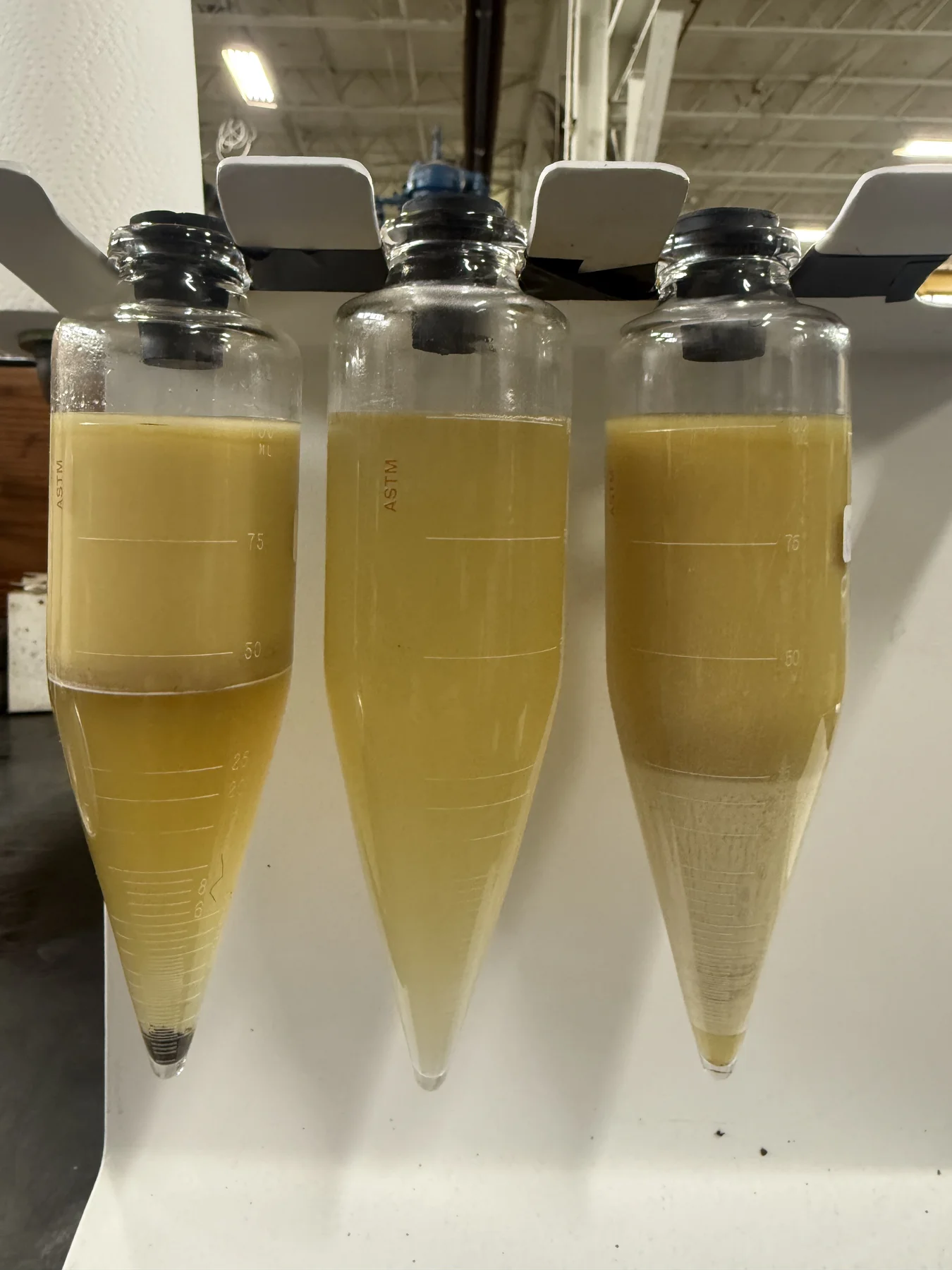
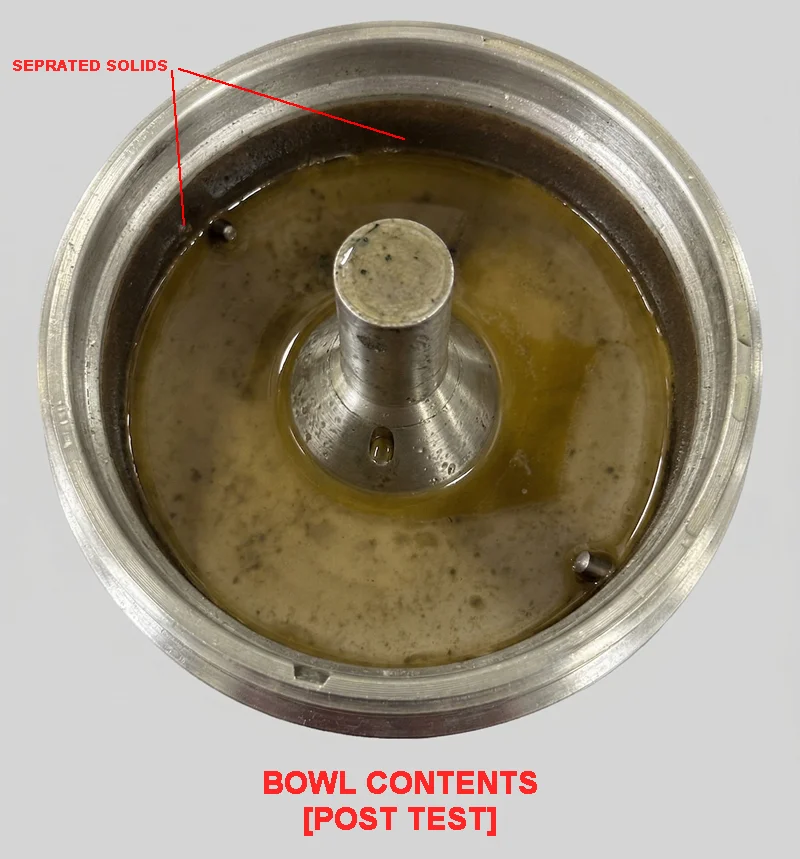
| Goal | Separate water from hydraulic oil and emulsion while removing fine solids. |
| Test finding | Heating and pre-straining improved the separation. The heavy phase appeared as clean water, while oil and emulsion discharged as the light phase. |
| Recommendation | Use a 3-phase self-cleaning disc-stack centrifuge, with pre-straining when large debris is present. |
Takeaway: The test showed both the separation result and the needed pre-treatment step.
Coolant with Tramp Oil and Sludge
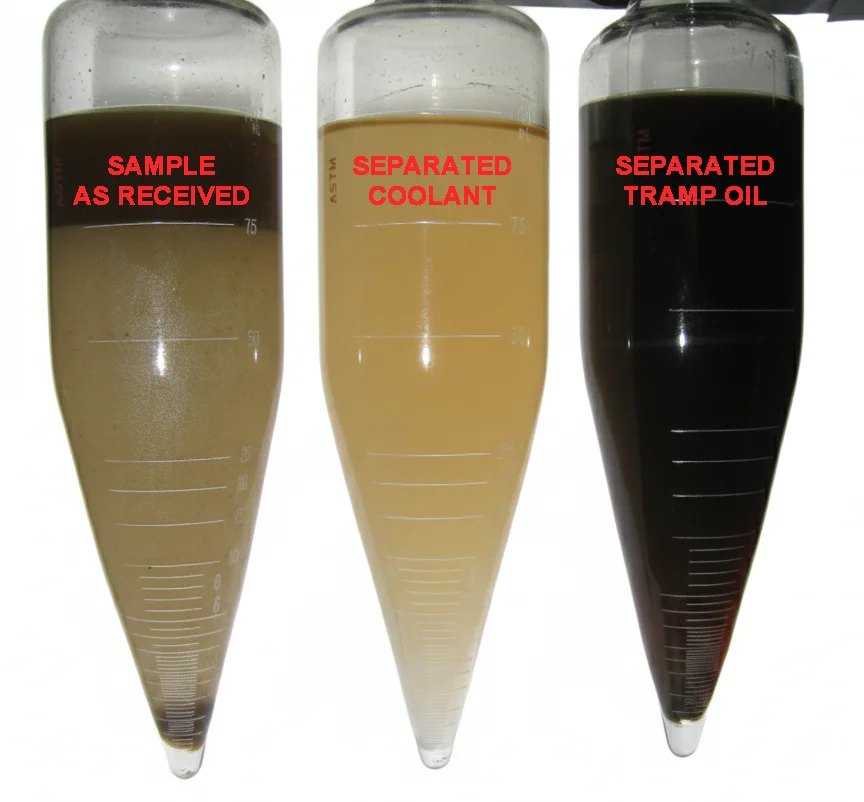
Note: This video is for visual guidance only. Sample testing does not guarantee production-scale performance, final product quality, lab results, disposal approval, regulatory compliance, or commercial suitability.
| Goal | Separate tramp oil and sludge from water-based manufacturing coolant. |
| Test finding | The sample separated into clarified coolant, separated tramp oil, and collected sludge. |
| Recommendation | Use a 3-phase self-cleaning disc-stack centrifuge in a kidney-loop setup on the coolant tank. |
Takeaway: Sample testing can show whether coolant recovery is practical before investing in a full system.
Wastewater with Fine Carbon Particles
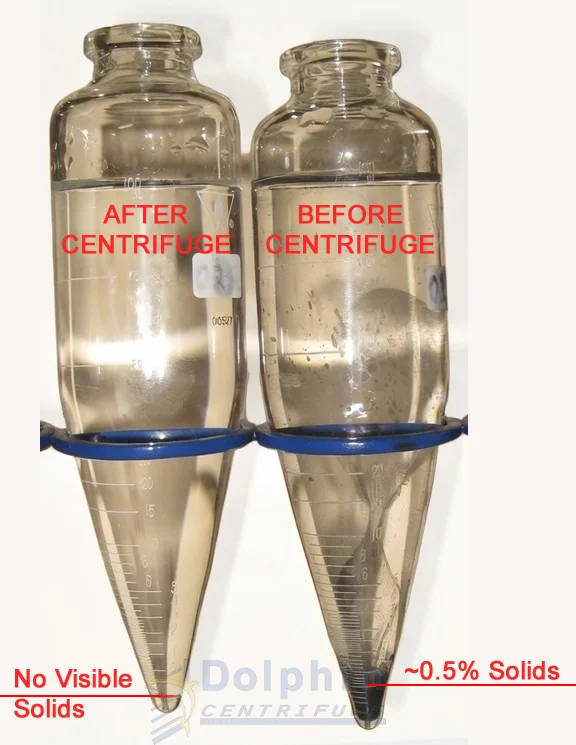
| Goal | Remove fine suspended solids from industrial wastewater. |
| Test finding | The disc-stack centrifuge removed nearly all visible suspended solids from the test sample. |
| Recommendation | Use a self-cleaning disc-stack centrifuge sized to the required plant flow rate. |
Takeaway: The test confirmed that fine particle clarification was a good centrifuge application.
Wastewater with Dissolved Color and Cloudiness
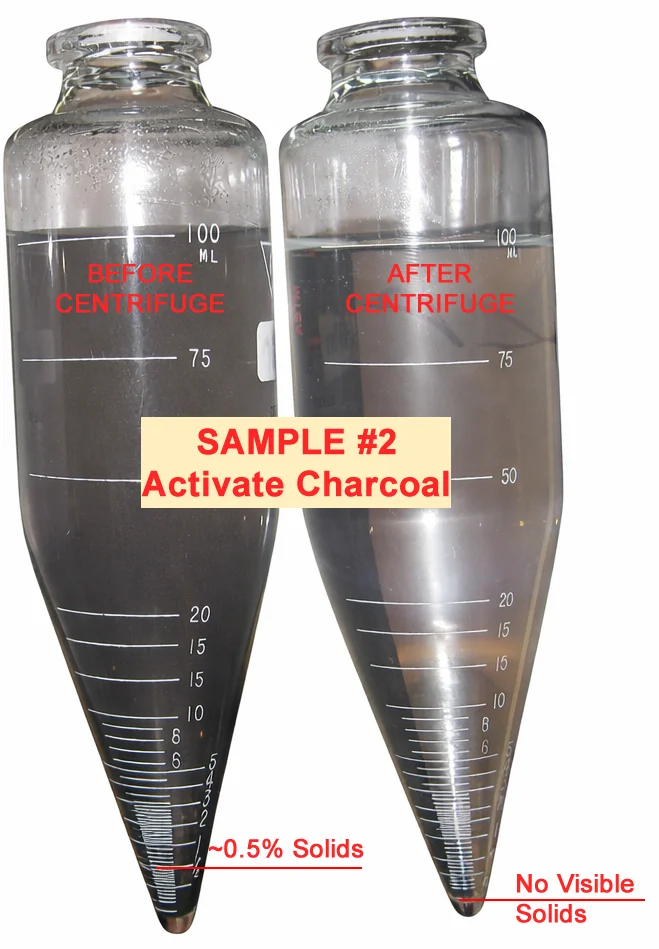
| Goal | Improve wastewater clarity beyond basic suspended-solids removal. |
| Test finding | Centrifugation removed suspended solids. Activated charcoal pre-treatment improved visual clarity by adsorbing material that centrifugation alone could not remove. |
| Recommendation | Pair chemical or adsorbent pre-treatment with centrifuge separation when dissolved or colloidal contaminants are present. |
Takeaway: A centrifuge removes separable solids. Testing helps reveal when pre-treatment is needed.
Glycol and Water with Trace Suspended Solids
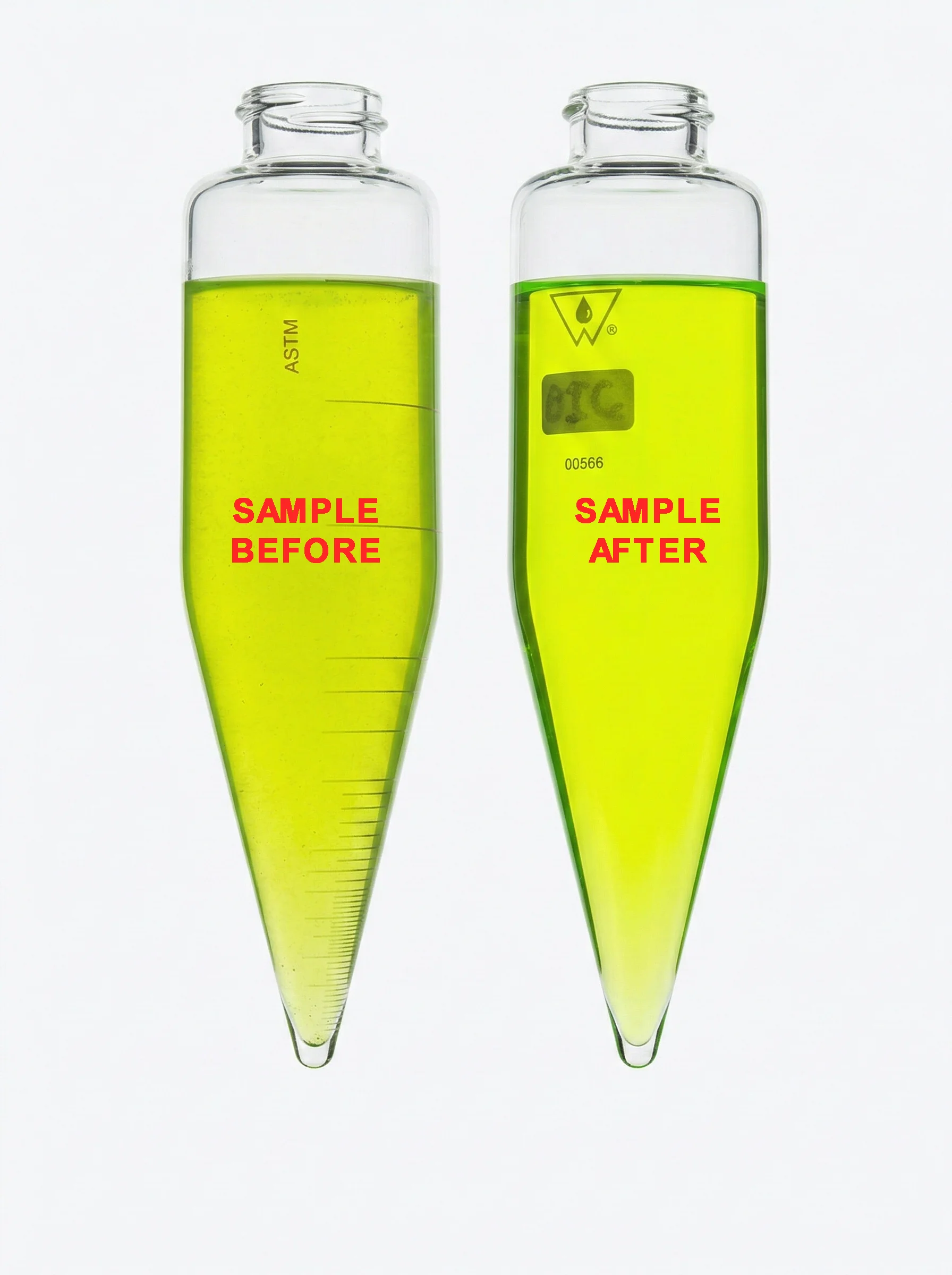
| Goal | Determine whether centrifugation could visibly clarify a low-solids glycol sample. |
| Test finding | The sample contained only trace solids, and the before and after samples looked nearly identical by eye. |
| Recommendation | Return samples for lab analysis before recommending equipment. |
Takeaway: A good test is not always a sales pitch. Sometimes it shows that a centrifuge may not be worth buying for that fluid.
What the Photos Show
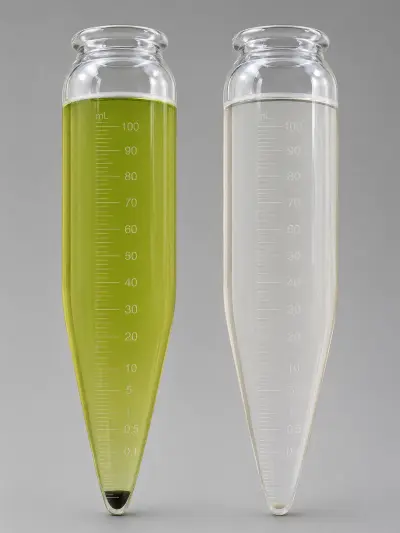
Before and after photos are useful, but they are not the whole test. Dolphin also checks bowl contents, separated phases, temperature sensitivity, solids loading, and whether a pre-filter, heat, chemical aid, decanter, or disc-stack centrifuge is the right next step.
How to Use These Examples
These examples are not guarantees for a different fluid. They are proof of the testing method. If your sample has similar contamination, Dolphin can test your actual material and provide a practical recommendation based on observed separation results.
The production machines behind those recommendations are Alfa Laval. A self-cleaning three-phase result usually points to a remanufactured Alfa Laval WHPX 405, supplied as the Dolphin DMPX-014, or to a larger MOPX 207 or MOPX 209 in the DMPX series. A low-flow manual-clean result points to an Alfa Laval MAB supplied as the DMB series, and a high-solids feed points to an Alfa Laval NX decanter ahead of the disc stack.
Sample Testing Cost and Limitations
Sample testing is a chargeable service. The cost depends on the type of sample, whether heating is required, whether the test is 2-phase clarification or 3-phase separation, the setup and cleaning time required, and whether separated sample phases need to be returned. Return shipping and special handling are quoted separately when applicable.
The test results are for guidance only. They do not guarantee production-scale performance, final product quality, regulatory compliance, disposal approval, customer lab results, or commercial suitability. Full-scale results can vary based on flow rate, temperature, feed consistency, solids loading, chemistry, upstream treatment, and equipment configuration.
Want to test your own sample?
Send Dolphin Centrifuge a representative sample and we will evaluate separation performance, document the visual results, and recommend the appropriate centrifuge path.